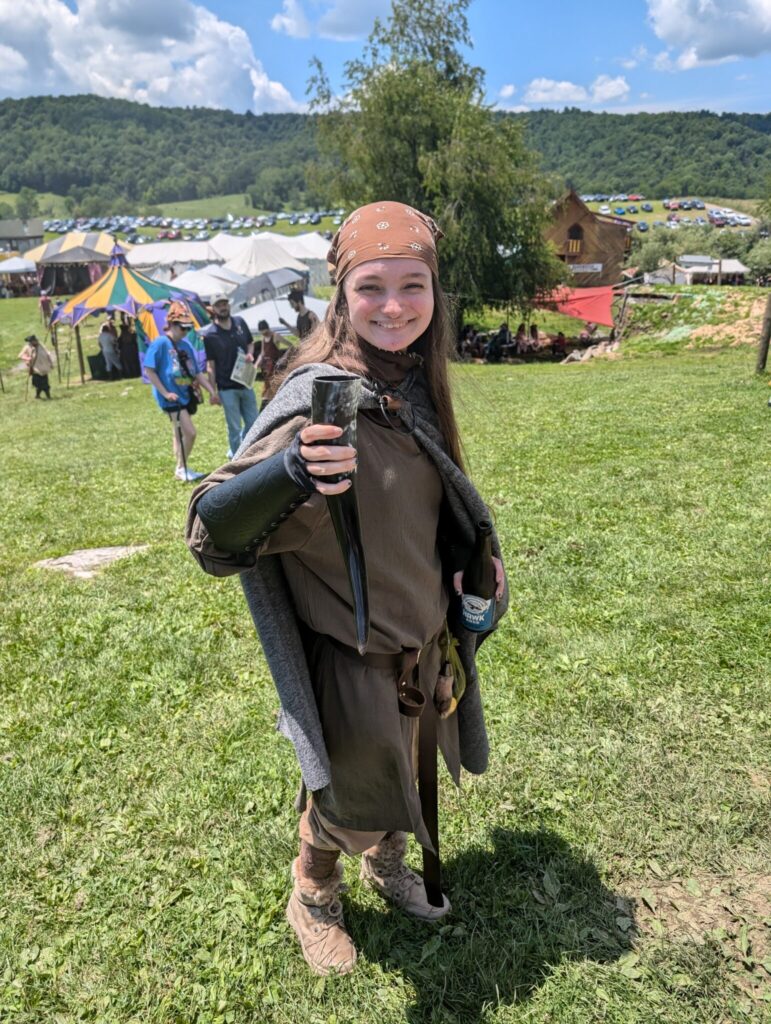
Hello! I’m Dane, a graduate history student and Hedrick intern and researcher at Marshall University. I graduated in 2025 with my bachelor’s degree in history, and my area of focus is primarily in the Medieval Period, Viking Age, and historical textiles and their recreation.
This is my little corner of Norse by God- my textile recreation blog! Here, you’ll be able to find weekly updates on my textile recreation ventures every Wednesday, and get an in-depth look into the tools, techniques, and research that goes into textile recreation.
I’ve always had a love for creative things, especially textile arts like sewing and patterning. My interest in history was in part due to textiles- I’ve always loved historical costuming, specifically the medieval, and when I first learned about textile recreation in my undergraduate years, it felt like what I was meant to be doing! Now, I’ve got a range of recreations under my belt spanning across a variety of time periods and derived from or based on finds all over Europe.
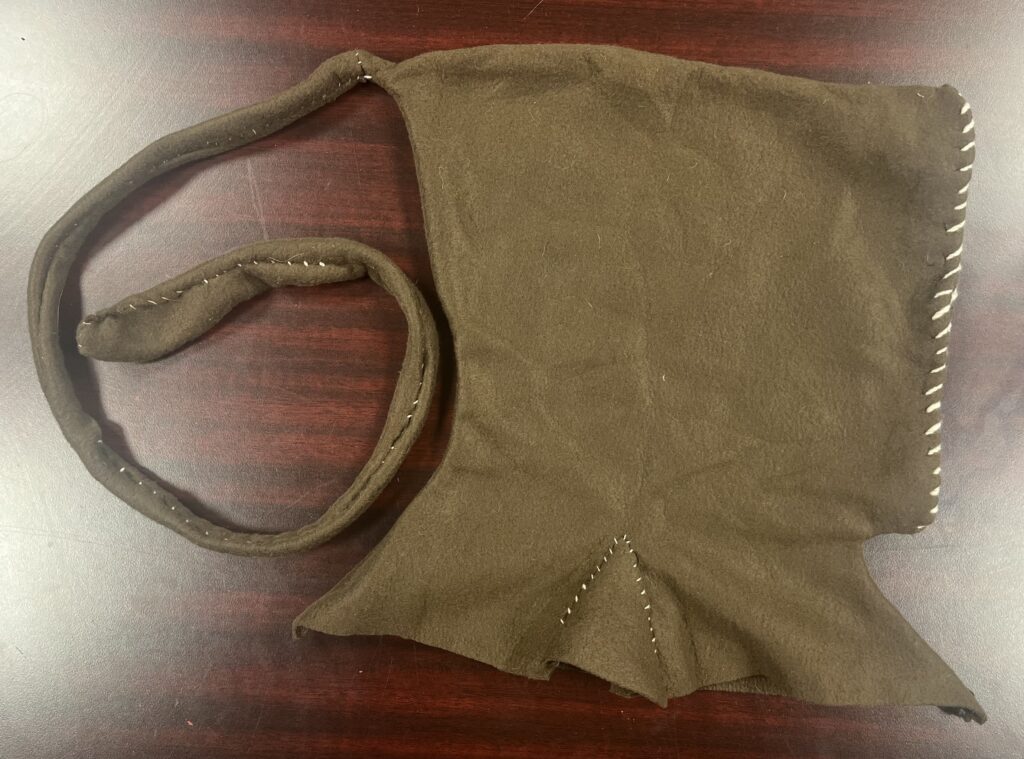
My first step into textile recreation was through the Herjolfsnes finds, specifically the Herjolfsnes hood, or hood D10606. Deteriorating church ruins near the southernmost point of Greenland revealed a Norse graveyard at the coast. The erosion of the graveyard into the sea revealed textile finds dating back to the 14th century. Finds included hoods, tunics, hats, and more, and the Herjolfsnes hood specifically interested me due to its simplicity and its clever construction, including gores in the shoulders for a more comfortable fit. I learned how to spin thread from wool with a drop spindle, and sewed the hood together by hand using a pattern I made based off of the measurements and images of the original garment.
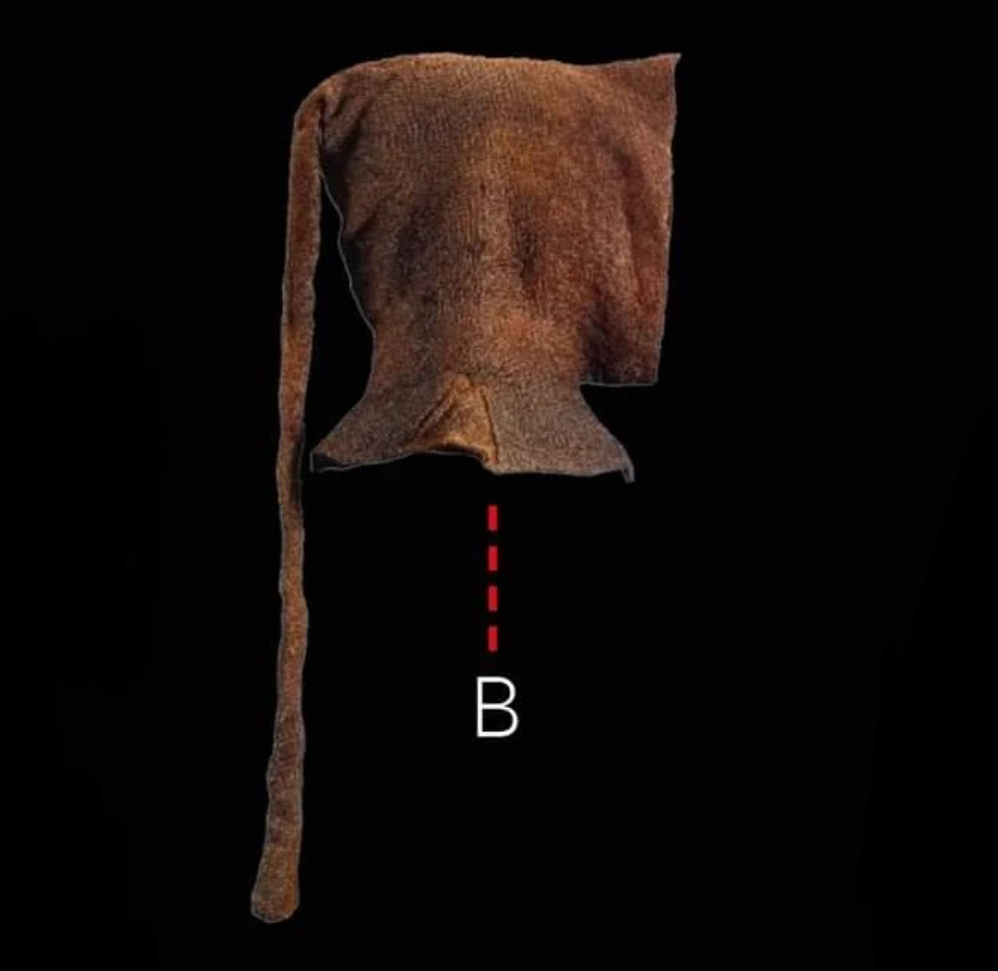
An image of the hood found at Herjolfsnes. Note the gores on the shoulders for a comfortable fit, the long liripipe, and the marks from wear around the front opening that show the long hood was folded back around the face at times.
My recreation of the hood using fleece, hand-spun thread, and stitching methods accurate to the original garment.
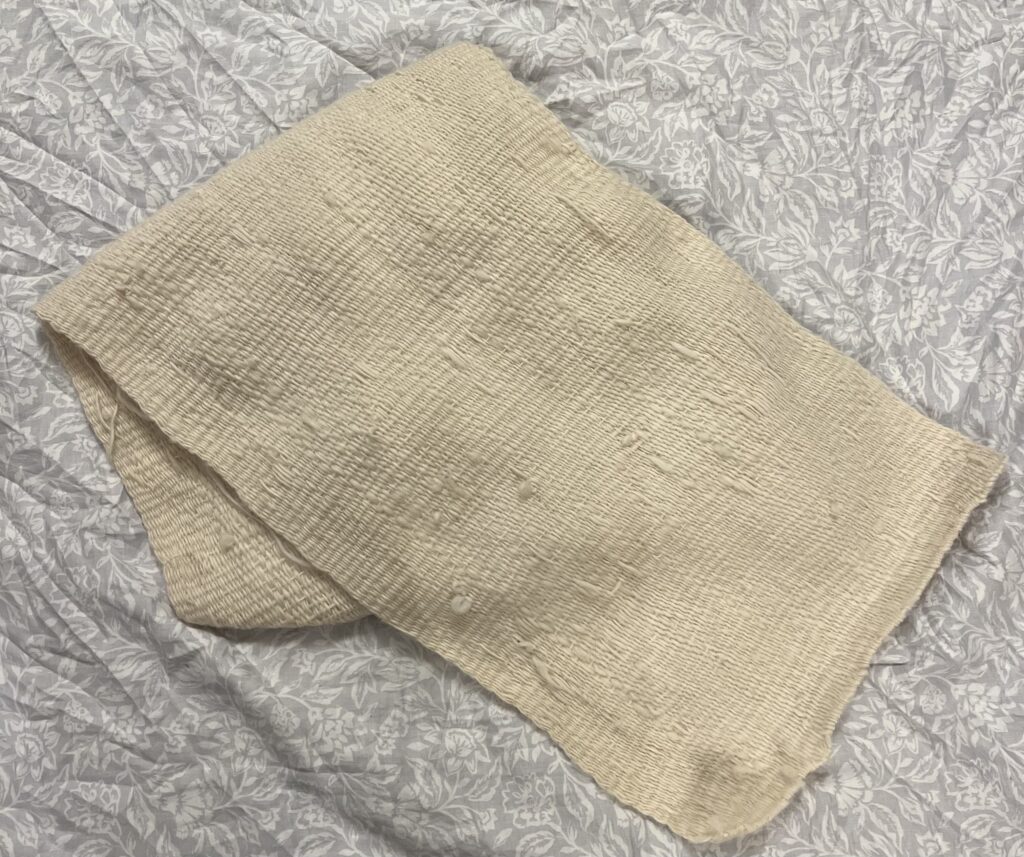
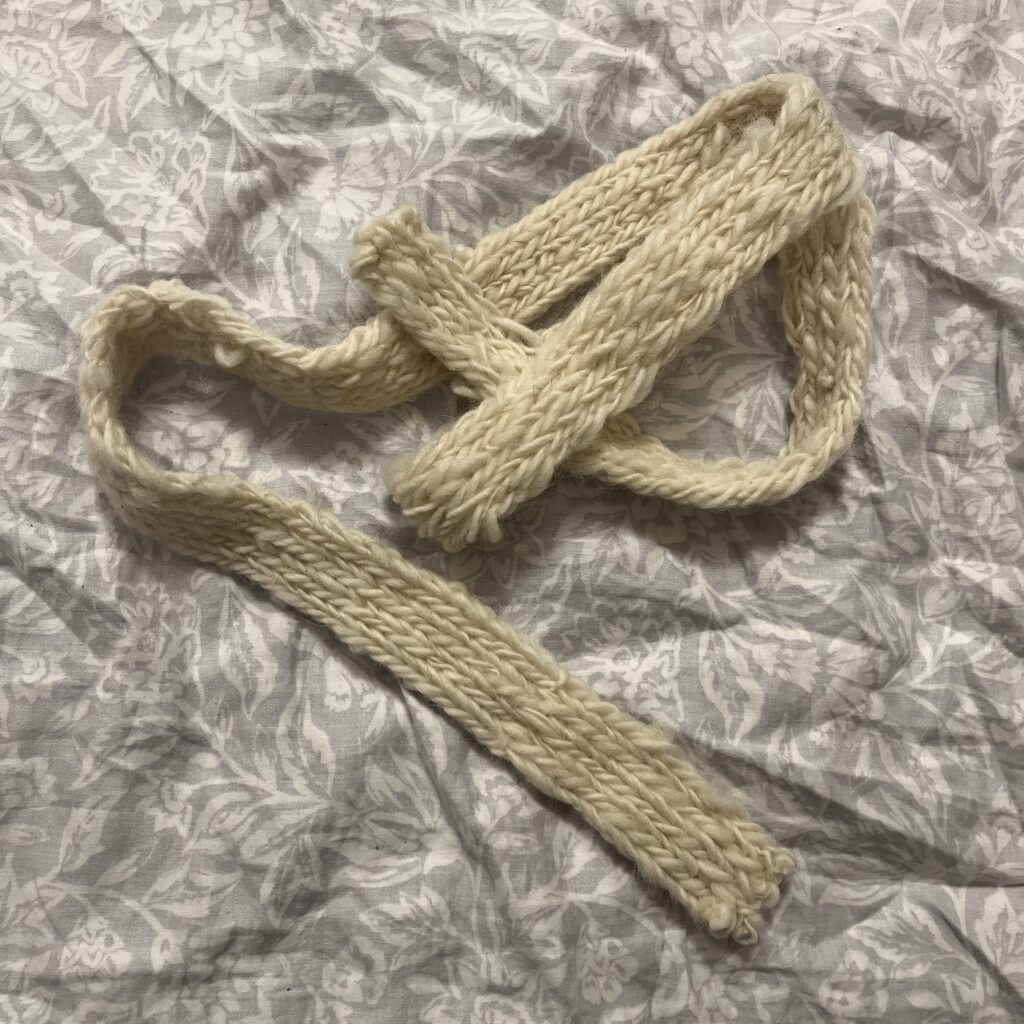
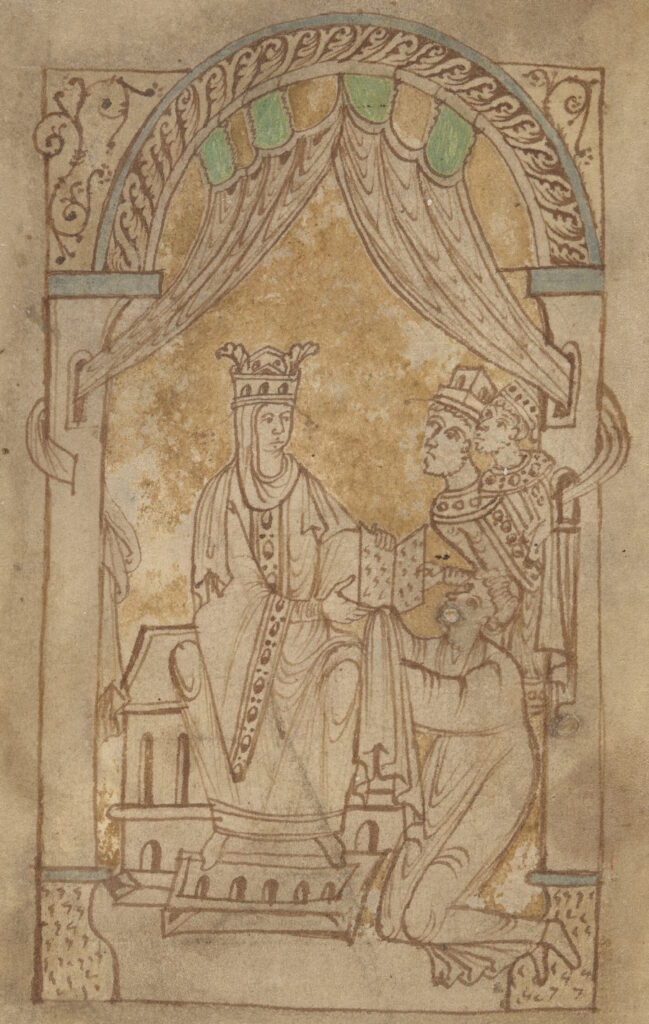
The recreation that by far took the most work was the veil of Queen Emma of Wessex, wife of Cnut the Great. I was very honored to receive the Spring 2025 Undergraduate Creative Discovery Research Grant in the final semester of my undergraduate years, and my proposal set forth a rather daunting project that was like nothing I’d done before: recreate a historical textile without an existing archeological find to reference, guided through my knowledge of textile and fashion history and depictions of the garment in illuminated manuscripts and artwork. Emma of Wessex is widely depicted in artwork, and her veil and bænde, or headband, seemed complex enough to prove challenging to create but possible within the time constraints.
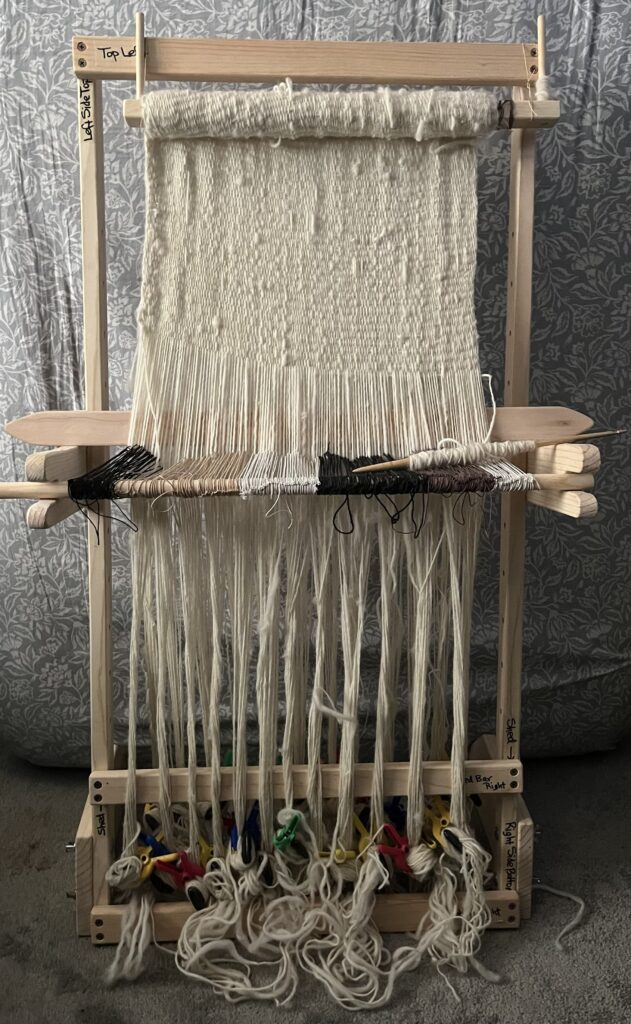
Through spinning over 1000g of wool into roughly 3000 yards of thread using an Anglo-Saxon spindle, I had crafted enough to weave the veil from scratch on a warp-weighted loom. This process took months of work and research. After this, I used weaving tablets to use the same thread to weave her bænde. The result was a veil that was roughly 5 feet long and 17 inches wide, alongside a 4 foot band. Not only did this project both grant me access to and teach me how to use these wonderful historical textile crafting tools, but it redefined to me the value of textiles in the Medieval Period and Viking Age solely by making me live the painstaking process of crafting them. No wonder the Vikings used fabric as currency!
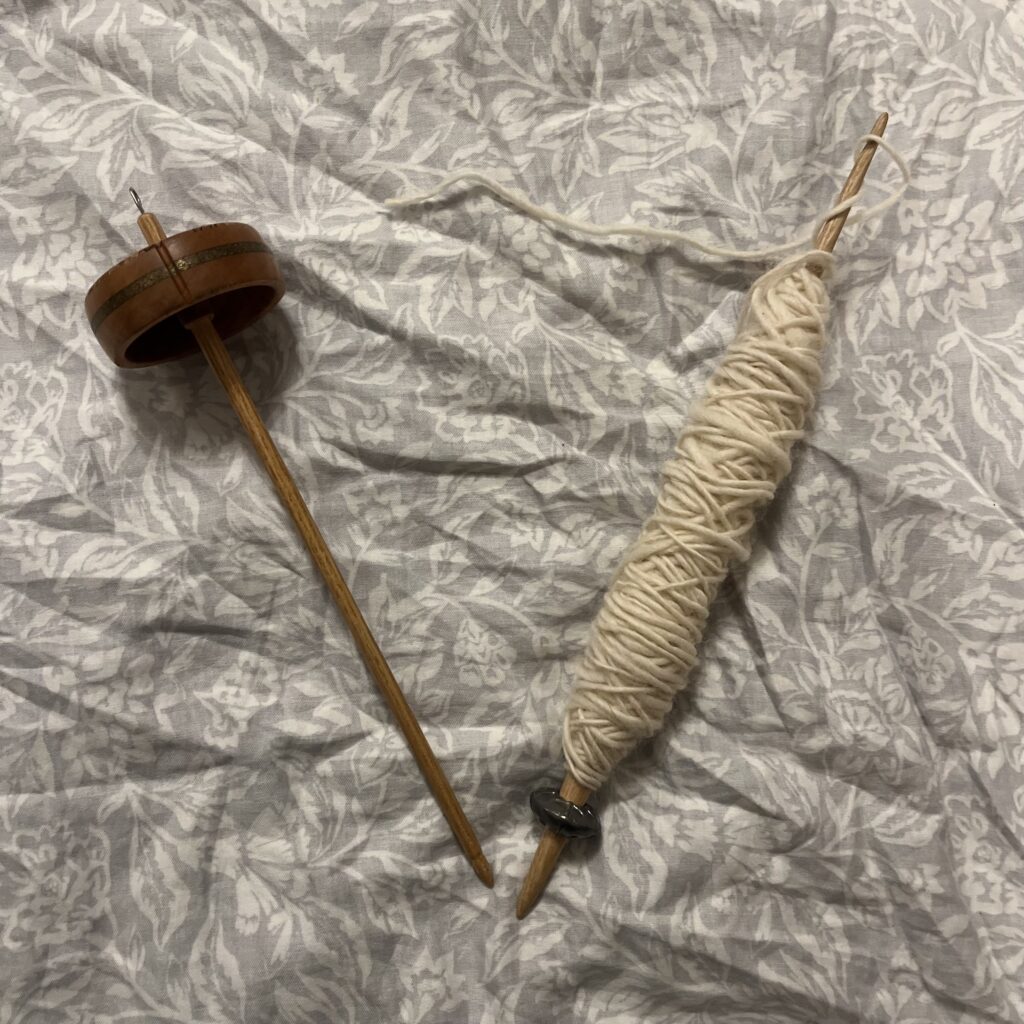
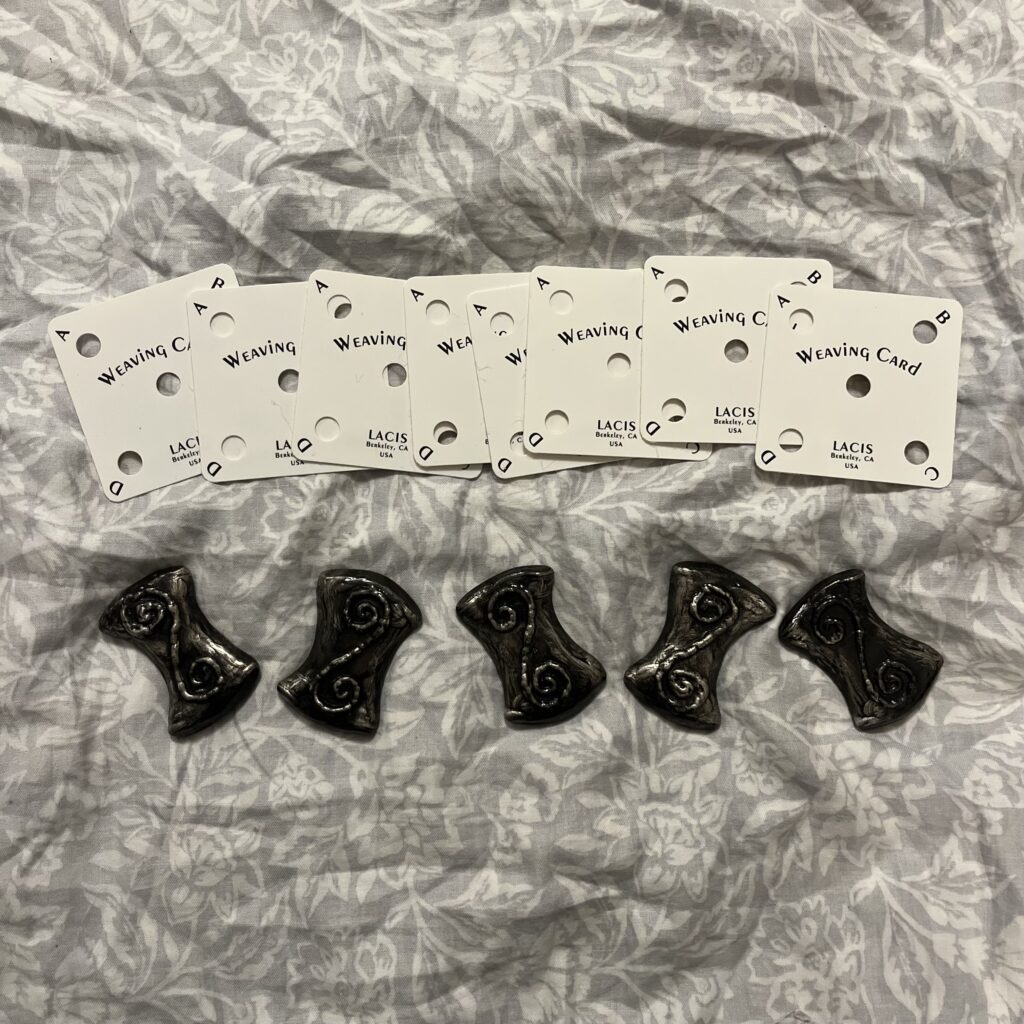
My most recent creation was guided by the book Bog Fashion by Nicole DeRushie. I made the sleeved tunic, a pattern based on the Thorsberg tunic, a 4th century Angle tunic found in a peat bog in northern Germany. This is the oldest textile I’ve recreated, and also my first step into crafting my own tools: bone needles!
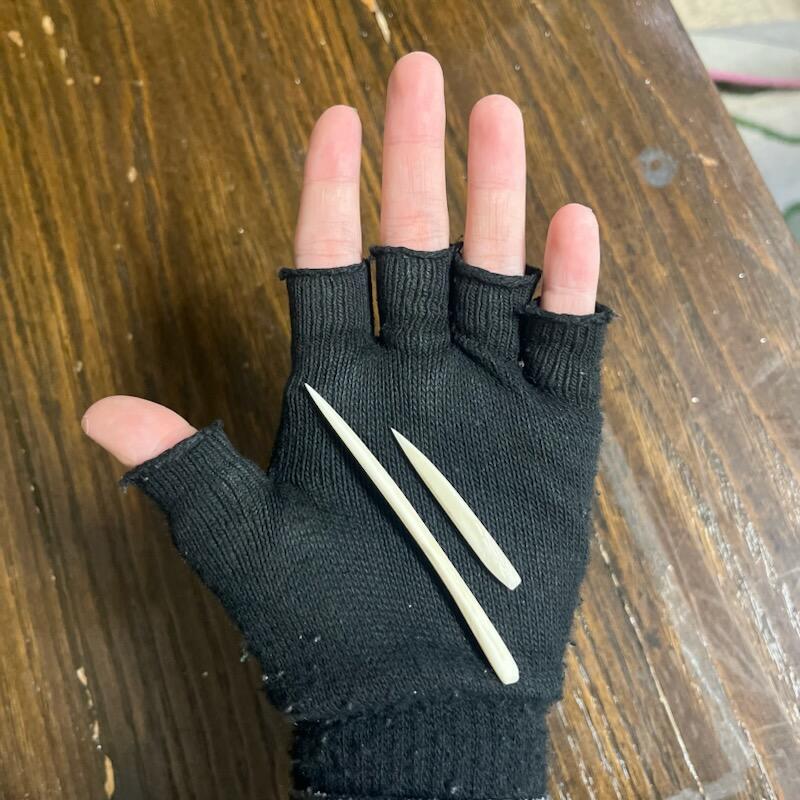
Two needle blanks, crafted from the long bones of a deer’s leg. This is before the eyes were drilled and in the early stages of sanding them smooth and to a point.
Nico (whose work you can read on here- check out the Hoard) and I spent a few months working to craft these tunics from the instructions in the book, alongside making needles following the book’s instructions. I won’t get too into the fine details, because you can actually read all about it here, but we had a ball getting covered in bone dust to craft our needles and then getting to sew with them using garment-accurate stitching and beautiful wool fabric. We wore the resultant tunics to the Celtic Feast held at the end of the Celtic Britain class, and found that they were rather comfortable and really great at keeping us warm. Of course, they look wonderful with “viking” type clothing.
Here we are! Spot the telltale dapple of double turn hem stitching at the hems and seams. Nico’s featured period-accurate blanket stitching. We used different techniques to study differences in fit and wear using different stitching techniques with the same pattern.
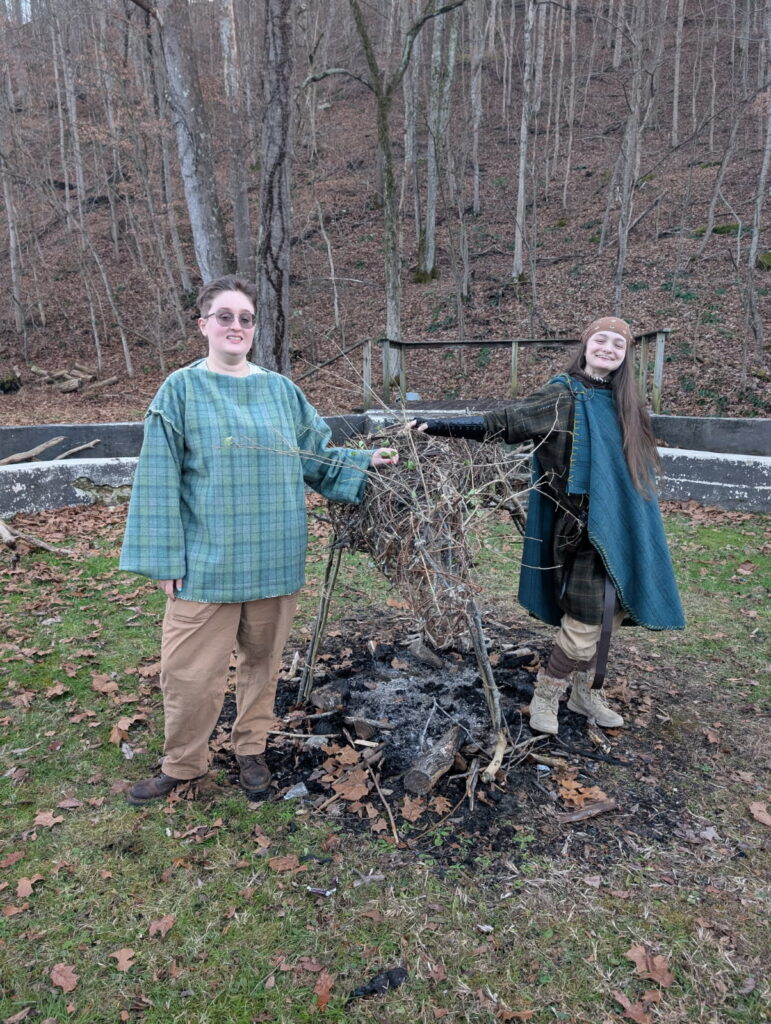
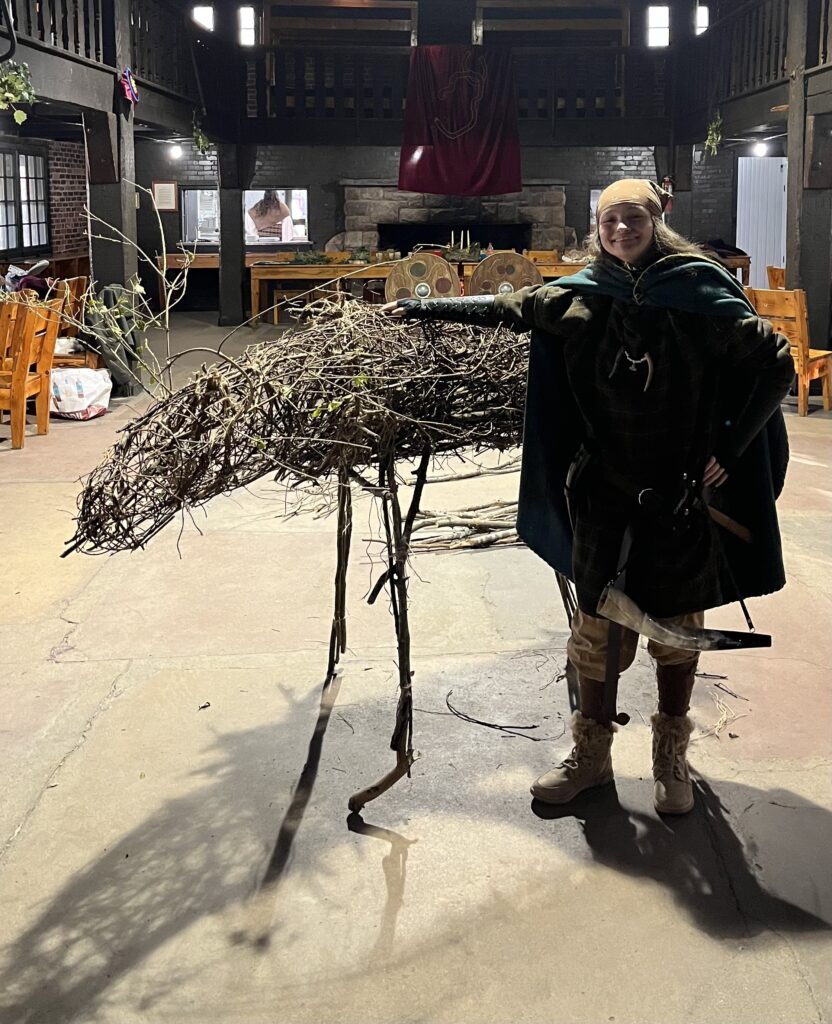
An action shot, if you will. Of course I’m smiling, my mead horn is full! This stag was a group project with some friends of mine from the Celtic Britain class, and was burned at the end of the feast to symbolically bring in winter.
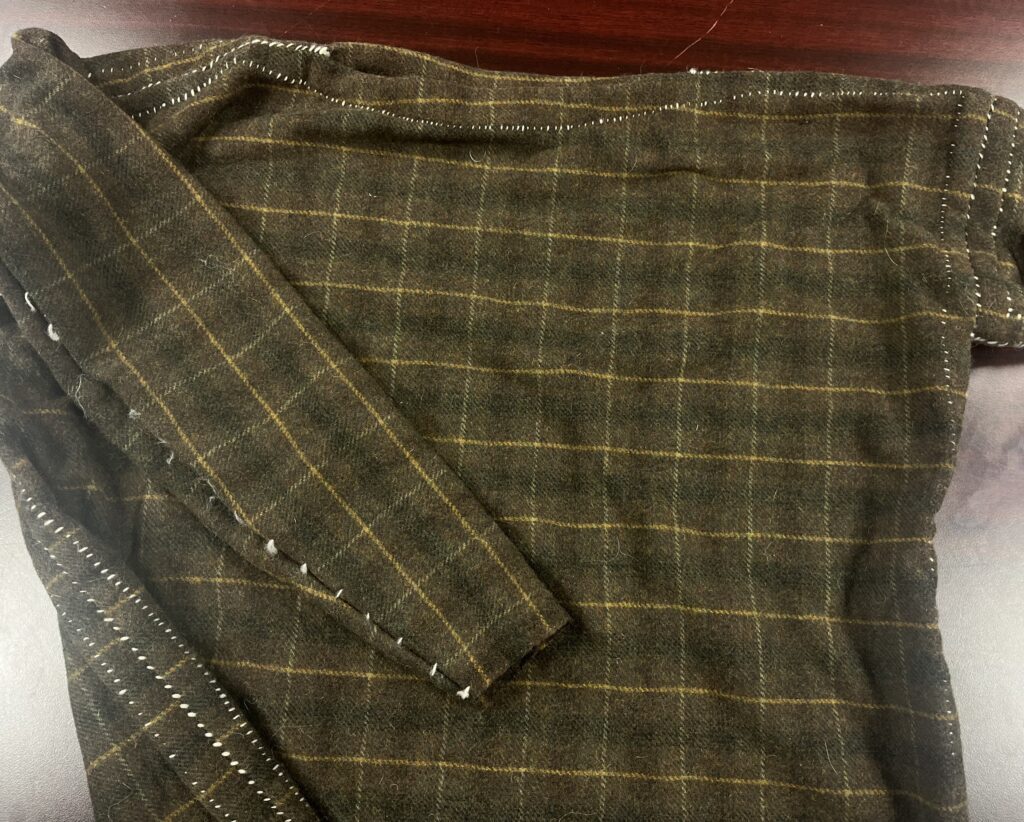
A better look at the hems and seams of the tunic up close, along with the beautiful fabric we got to use to make it. Again, the telltale dapple of a turn hem at the edges.
My next project is one of my most ambitious, and I’m beyond excited to share it with you. This time, we’re looking at illuminations from what I find to be one of the most wonderfully weird, richly illustrated, and visually and historically enriching manuscripts from the 14th century. Check back next Wednesday for more on that. It was nice meeting you— thanks for reading!