In 1361, on the island of Gotland off the coast of Sweden, the farmers and free men awoke to a startling message. Landing on their shores was the King of Denmark, Valdemar IV. He was seeking control of the trade routes that made landfall on Gotland, and had chosen the city of Visby, a member of the Hanseatic League, as his target of conquest and pillage. The Battle of Visby took place between the forces of Valdemar IV of Denmark against the Gutes on July 27th, 1361, in the county of Yeomen.
The Gutes are the native people who lived on the island of Gotland alongside a mix of other populations, most notable among them being the Danes and Germans. The native people of Gotland who would fight against the Danes were about two thousand farmers and freemen who lacked both the quality of weapons and training that their Danish opponents boasted. The leadership of this native defense was comprised of unknown freemen and potential local nobility who remain unnamed if they existed at all. And these men were expected to go to combat against a King and his army. The Danes, on the other hand, were better equipped for a battle. King Valdemar’s troops would have been comprised of his own Danish soldiers and potentially German mercenaries, all of whom would be better equipped than their opponents and would outnumber them by nearly five hundred. To add to the situation, many of these soldiers would be veterans with fresh experience from the various conflicts between the Scandinavian and German states. Overall, Gotland was in for a rough fight.
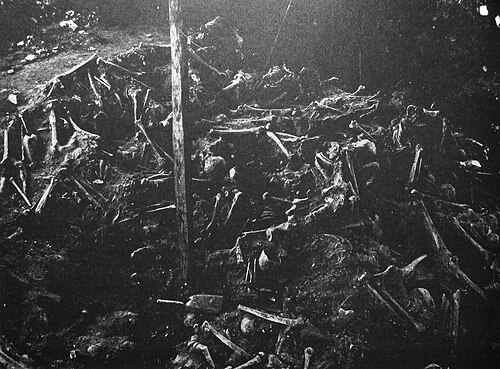
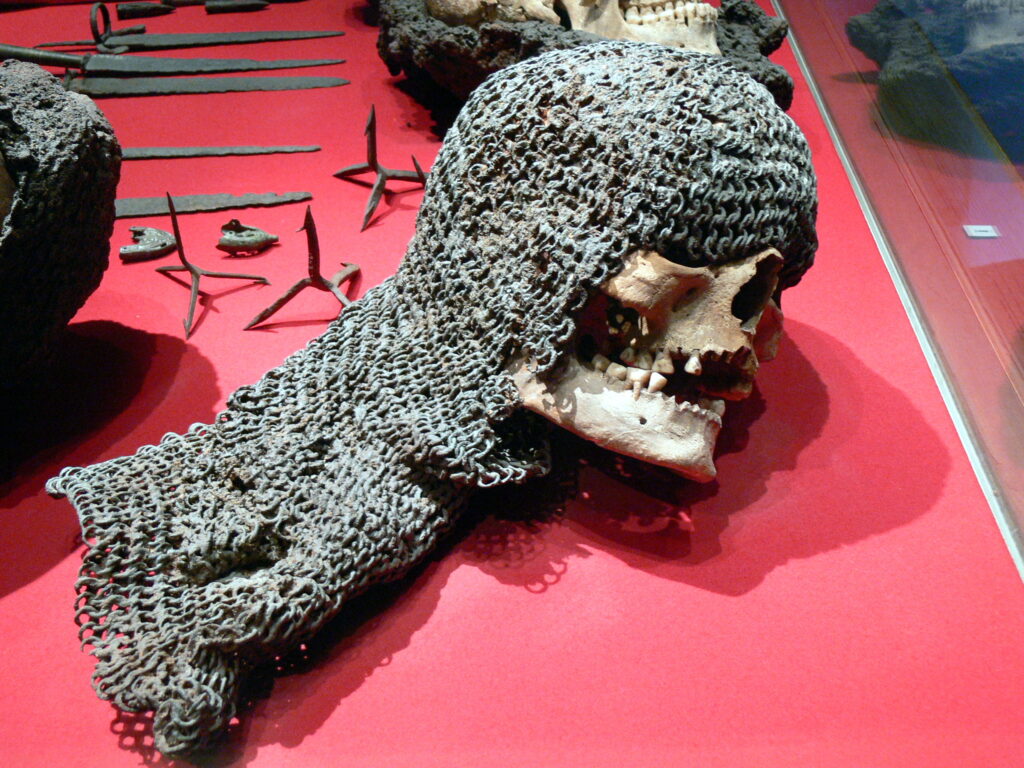
On the first day of the invasion, while still on his way to Visby, King Valdemar IV found himself involved in skirmishes with yeomen farmers, so that over one thousand farmers died before the King’s army even arrived at the city walls. Upon arriving outside Visby, the Danish army found a defense being mounted by nearly two thousand Gutes, mainly local freemen and farmers with little battle experience. By the end of the day, nearly all the defenders would be dead. The Danish forces would take far fewer losses, and while there was never an official confirmed casualty count, the archaeological evidence on the island and comparing it to similar battles of the time puts the number of Danes lost at about three hundred killed throughout the entire campaign.
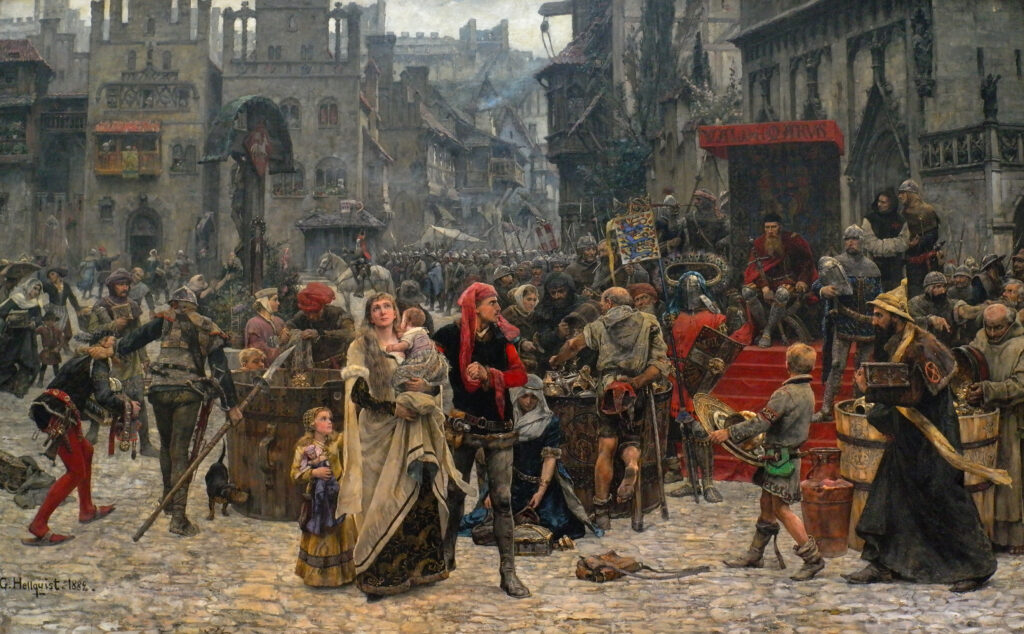
In the aftermath of the battle and the surrender of Visby, King Valdemar, tore down part of the city’s wall to make his entrance. According to legend, he lined up three giant barrels and demanded they be filled with gold and silver within three days or else he would sack the city. He was shocked to find that by the end of the first day, they were already filled. Whether true or not, Valemar ransacked the city anyway, stripping the churches of all their items of worth. Any gold or treasure was loaded onto Danish ships. With riches in hand and a new Kingship added to his collection, King Valdemar would return to Denmark but faced severe consequences.
The city of Visby was a member of the Hanseatic League, a medieval commercial and defensive network of merchant guilds and market towns that spread across northern Germany and the areas of southern Scandinavia. This league would take issue with Visby’s conquest and the loss of their market town on Gotland. Later down the line, in 1362, Sweden and Norway would ally to combat Valdemar and joining them would be the Hanseatic League, who would remember what was done to their League member Visby. The Hanseatic League’s fleets and army would be deployed to attack the coast of Denmark and would even reach and pillage Copenhagen itself.
By this point, King Valdemar saw fit to negotiate with the Hanseatic League and was forced to give the Hanseatic League free fishing and trade rights, tax exemptions for their fleets, several coastal towns, a military fort, and grant them a say in Denmark’s succession once he passed away. King Valdemar would gain Gotland, but the City of Visby made him pay for it steeply, even after their defeat.
Further Readings
Halliday, Stephen. “The First Common Market? The Hanseatic League.” History Today, 7 July 2009, www.historytoday.com/archive/feature/hanseatic-league-europes-first-common-market.
Dollinger, Phillipe, et al. The German Hansa. Routledge/Thoemmes Press, 1999.
Pratt, Fletcher. The Third King. Sloane, 1950.