Ever wondered what it would be like to touch, feel, and even wear history?
Ever wondered what it would be like to touch, feel, and even wear history? At Marshall University, one student is doing just that! Dane Childers, a Master’s candidate in history, has taken historical research to a new level, delving into the intricate world of early medieval textiles through the hands-on recreation of Queen Emma of Normandy’s veil and bænde. Having won the prestigious “Undergraduate Creative Discovery and Research Scholar Award” in the Spring semester of 2025, Dane was granted the opportunity to pursue both research and recreation of these textiles under the mentorship of Dr. Laura Michele Diener. Dane has been “weaving” a narrative that brings the past to life, one thread at a time, and I was fortunate enough to sit down and chat with her about the process.
Why Ancient Threads Are Important
Dane’s journey into the art of cloth craftmanship began with a deep fascination for early medieval and Viking Age textiles. Dane explained that while these fabrics might appear “deceptively simple looking,” they “require an unreal amount of work, time, materials, and an understanding of a wide variety of tools and methods to create.” For Dane, unraveling these ancient techniques is more than just a challenging puzzle; it’s a gateway to unexpected research and intriguing historical sources.
Queen Emma’s garments were a deliberate choice. Dane explained to me that Emma “was married to Cnut the Great, a Viking who was basically the very first king of all of England.” Emma, Dane noted, “held a lot of power in this relationship. She was much like an advisor that taught him how to rule like a king rather than a goði.” Emma lived during a transitional period at the end of the Viking Age, an era that deeply intrigued Dane due to its socioeconomic and cultural changes. This period saw a shift from the Viking way of life to the medieval way – the era of kings and kingdoms, rather than a more nomadic lifestyle, where groups were won over by what a goði could offer them. Beyond being a captivating historical figure, Dane found Emma particularly compelling because “[Emma’s] image is one portrayed extensively throughout early medieval artwork and illuminations, especially when compared to other early medieval queens.” These artistic depictions offer “a rare glimpse into the textiles of the era,” showcasing “beautiful veils, colorful dresses, and woven bands.” The baende, a long strip of fabric with embellishments that wrapped around the head, piqued Dane’s interest specifically. Dane aimed to bring this garment back to life, using authentic tools and methods.
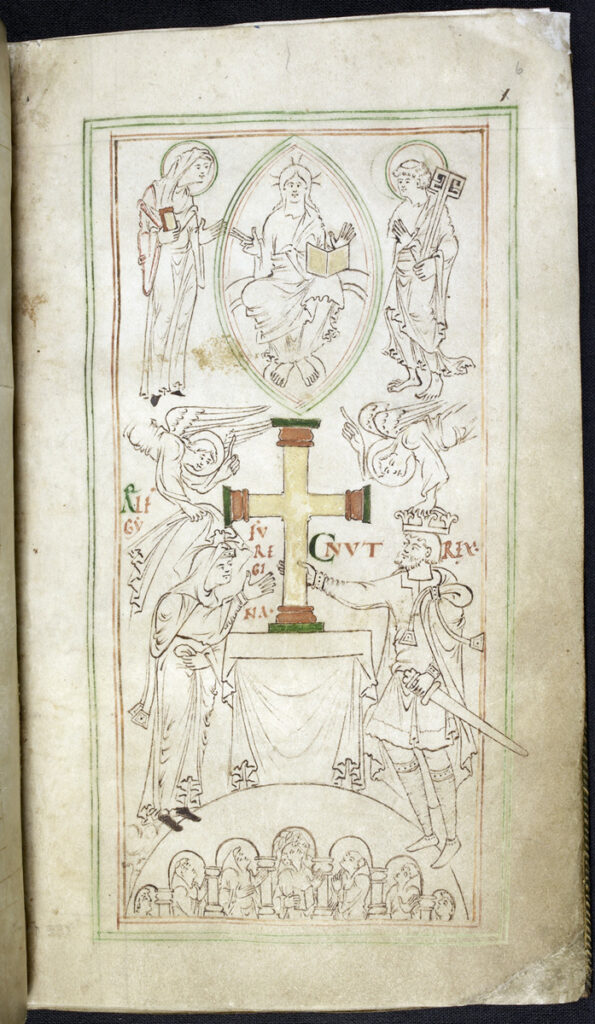
https://blogs.bl.uk/digitisedmanuscripts/2011/06/the-new-minster-liber-vitae.html
King Cnut and Queen Emma presenting a cross to the altar of the New Minster, Winchester, British Library
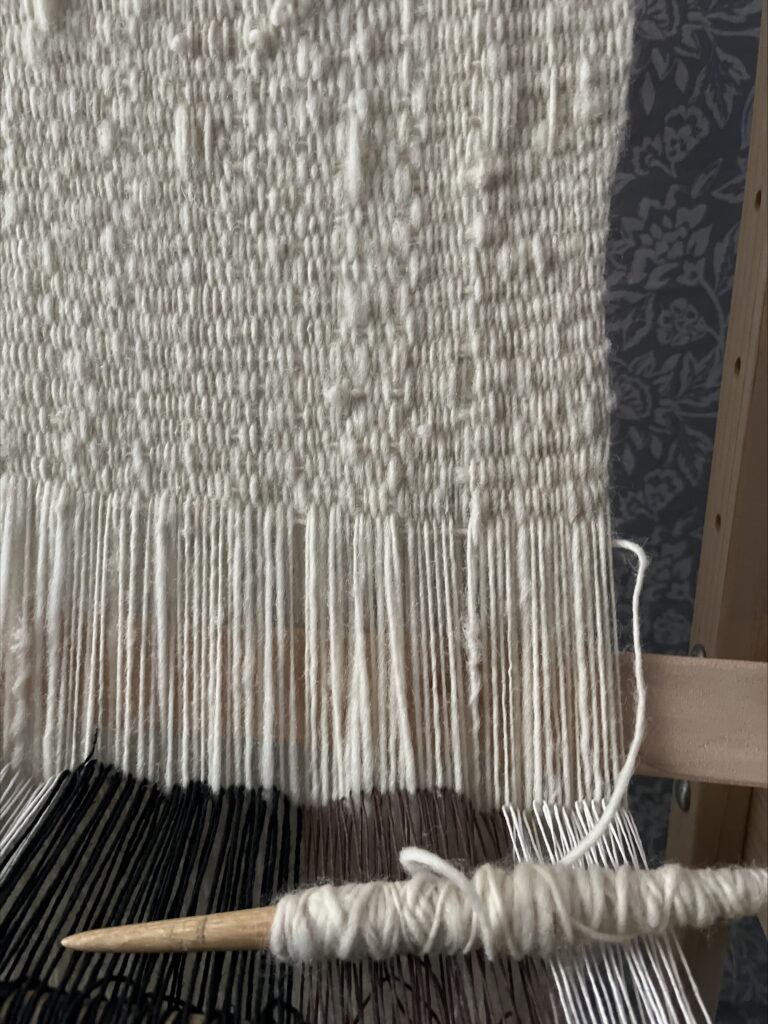
Embarking on such an immersive project required serious commitment and a good dose of patience. When asked the most surprising revelation she encountered, Dane mused, “Probably the sheer amount of time,” adding, “The idea that it takes seven spinners to keep one weaver going is absolutely true, if not more than seven.” To craft Emma’s veil and bænde from start to finish, she said, “easily took more than 150 hours of work- mostly spinning, but the weaving was something I worked on during basically all my free time for months.”
Textile recreation offers insights unattainable through conventional historical research methods. For example, Dane found it challenging to locate detailed information on ancient textile tools and their usage, noting that “in practice, they often functioned differently from the few descriptions I did find.” Before embarking on the recreation, Dane admitted she “didn’t have nearly as good of an idea of how much time and work these textiles take to craft.” Ultimately, the finished textile recreation serves as the closest approximation. This tactile engagement allows researchers to “learn things like how the garment was worn, which can help you to draw new conclusions about the original textile from recognizing points of stress or wear patterns that would occur naturally (like creases or areas you didn’t previously notice mending in).”
Picking Fibers
Choosing the right wool was a whole research project in itself. Dane was set on using something closely resembling what was available back then. This meant diving into “conservation breeds,” or “heritage breeds,” sheep that are closest to ancient stock.

https://www.rbst.org.uk/whitefaced-woodland
While acknowledging that conservation breed fibers are likely not the same fibers used to make Viking clothing, Dane defends that they allow us to get something similar in terms of product. She also sought a “long fiber, or staple, length, [as she] wanted to spin rather thick yarn.” This choice, she explained, not only meant “more mileage out of [the] fiber, but it would also be conducive to spinning thicker thread, making it just a bit easier.” And for an extra touch of authenticity, she looked for a breed geographically relevant to Queen Emma’s domain. The Whitefaced Woodland’s earlier ancestors hailed from the Pennines, a set of hills that ran through the north to the middle of England, and where they were kept extended even further into Southern England.
Dane elucidates, “While not as close [to Emma’s domain] as I would [have] liked, it isn’t beyond reason to believe that these fibers would’ve easily been available there. It was as accurate as I could get.”
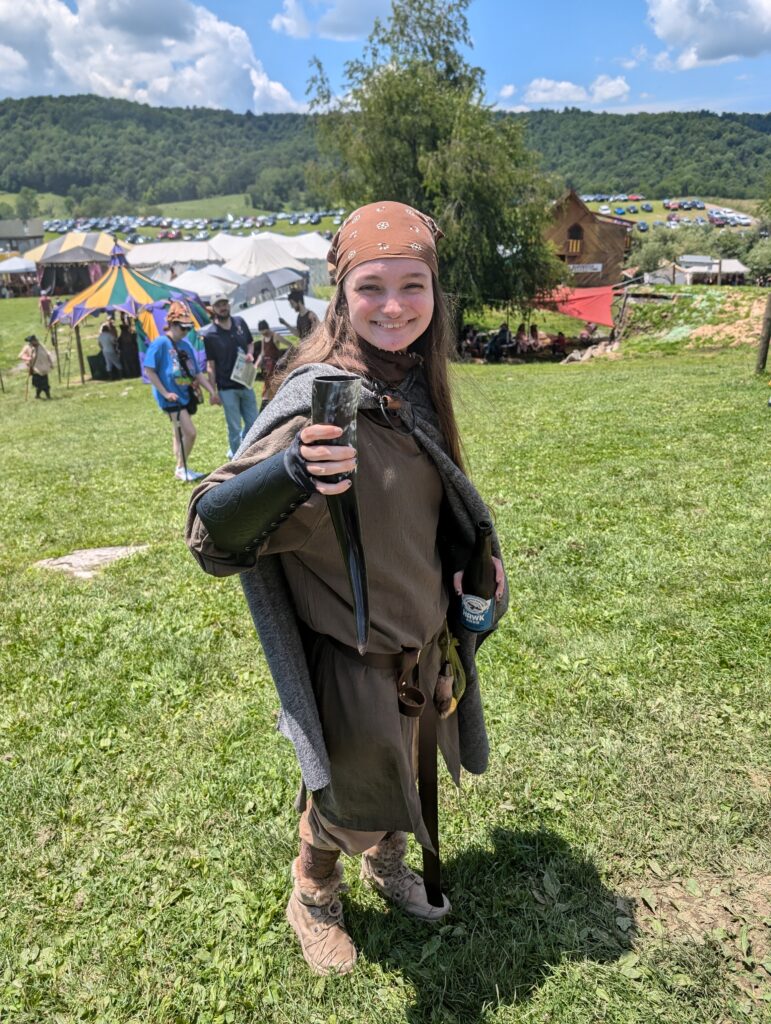
This is an amazing site to learn about Norse history and all the interesting project that go on in Dr Diener’s history classes with her constant battle against so and finding new inventive ways to keep students interested and hands on. Also Dane is amazing and creative and talented and the ren-fair was so much fun!!!