Hello! Last time, we finished up the belt. This time, we’re onto more patterns, because I’m still waiting on some materials.
Something you might not think about when considering tactile recreation and wider topics surrounding medieval dress or period costumes is what exactly you’re supposed to wear under all of that. Historical clothing is famously regarded, usually humorously, as heavily layered compared to what we wear today. It’s not exactly a wrong sentiment, really.
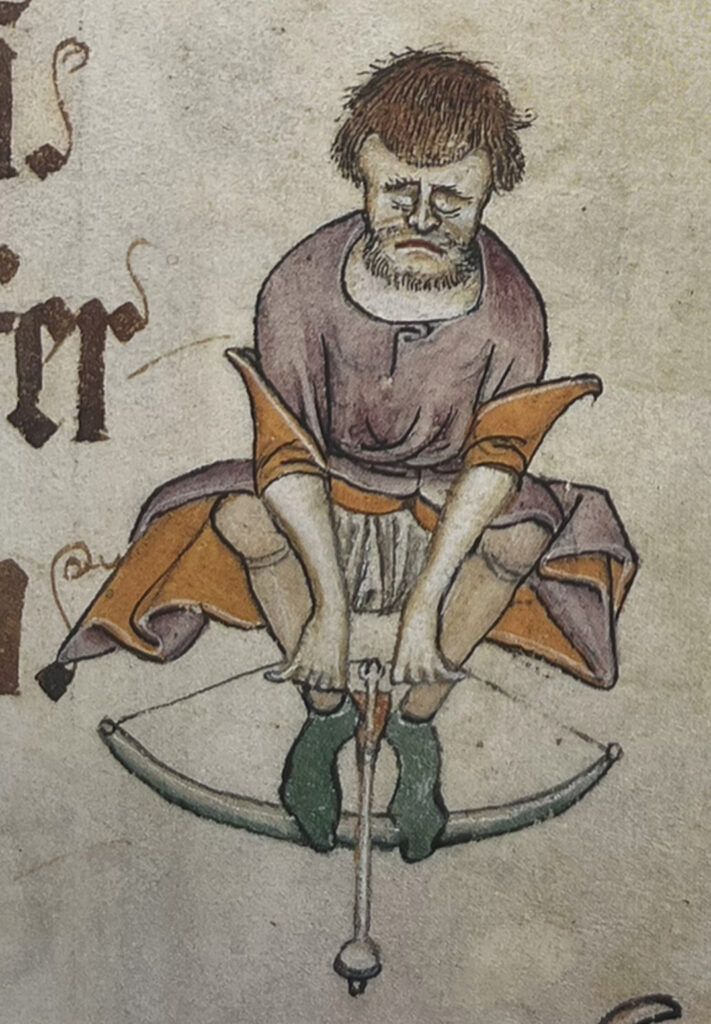
A crossbowman and his underwear. Sorry, crossbowman.
Even down to the poorest peasants, like our shepherd, there were layers going on. This actually has to do more with keeping your outer clothes nice and clean and keeping you comfortable than it does any kind of modesty, though in the case of underwear, braies are a must. I won’t get too into braies on the blog (take me to dinner first!) but it’s hard to do things like… ride a horse without them. Remember that we’ve stopped doing the pants thing for now, because really long socks are in vogue. Eventually, these socks will get so long that they connect in the middle and are partly the reason we refer to pants kind of weird today (a pair of hose->a pair of pants, which implies the existence of a singular pant that kind of makes me scared. Is it just one leg, or is it like a cursed pair of shorts?).
Just two guys being dudes, threshing with their braies out. Theirs are pretty colorful, though. Luttrell Psalter.
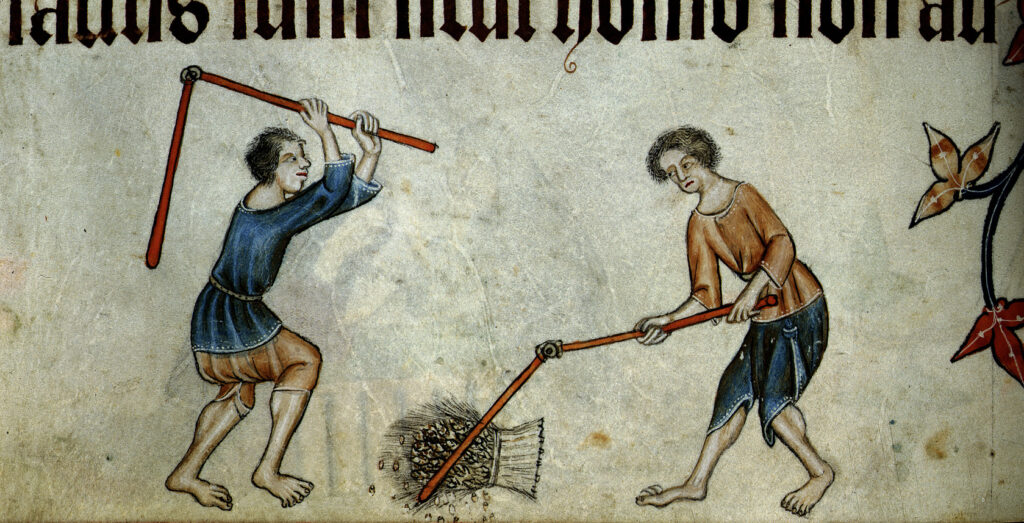
Anyway, back to business. The top half. Medieval underclothes for guys like our peasant consisted of braies, underwear that kinda look like a pair (this pair thing again…) of shorts with a built in belt to tie your hose to. The other part is an undershirt, which is what we’ll talk about today.
Why did you need an undershirt with all these hot wool clothes, you say? Well, it’s partly because of them. Wool, back then- at least the kind our commoner would be wearing- might not be the softest and most comfortable. Itchy sweaters persist into the modern day, and that’s with all the modern tools to soften them up and without the softer wool of modern breeds. Imagine how it was for a peasant who couldn’t afford the good stuff back when the good stuff was probably still pretty itchy. The other part of it comes from cleanliness. A lot of us aren’t out plowing fields and tending to livestock all day, and if we are, we have things like t-shirts and moisture wicking fabrics. Back then, most people were, either for a lord or to support themselves, and they had nothing of the sort. If you’re super sweaty or oily now, you just toss your clothes in the dryer. In the Middle Ages, that stuff needed to be hand washed, and each wash was a little rough on the garment and would cause the need for repairs, faded dye, etc etc. On top of this, a lot of peasants only had one set of clothes, so you had to treat them really nicely. Naturally, you just wear another shirt between you and your tunic to soak up all the sweat and oil, right?
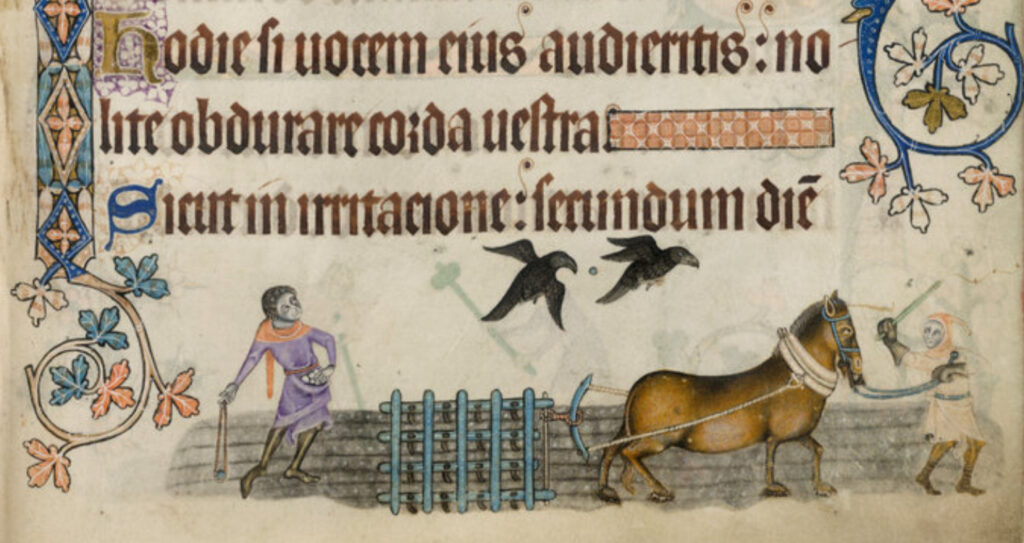
Folks doing some farm work, Luttrell Psalter of course. No underwear this time.
Hence the undershirt. It’s basically like a coaster for your body, but instead of preventing your mom getting mad at you for leaving little rings on the coffee table, it prevents you from sweating all into your wool tunic and making everybody smell you. It’s the fourteenth century, things are bad enough already in the smell category with plague season going down. Your undershirt and your braies would be made out of linen, most of the time. Linen is made out of spun flax, a plant fiber, and it weaves into a much thinner, breezier fabric than wool, which makes it nice for underclothes. Plant fibers dye really awfully- it’s pretty much a waste of time to try, because it’ll wash out so easily. This is why you always see these garments in white, and it was generally regarded that they should be. Once again, plant fiber doesn’t dye or stain easily, so this wasn’t too hard to do as long as you kept clean- which medieval people did, across social strata. Contrary to popular belief, people were generally pretty cleanly and even if you couldn’t afford to outright bathe you had a nearby body of water to take a dip in most of the time.
Basic pattern on an undershirt. Very simple because it didn’t need to be complex.
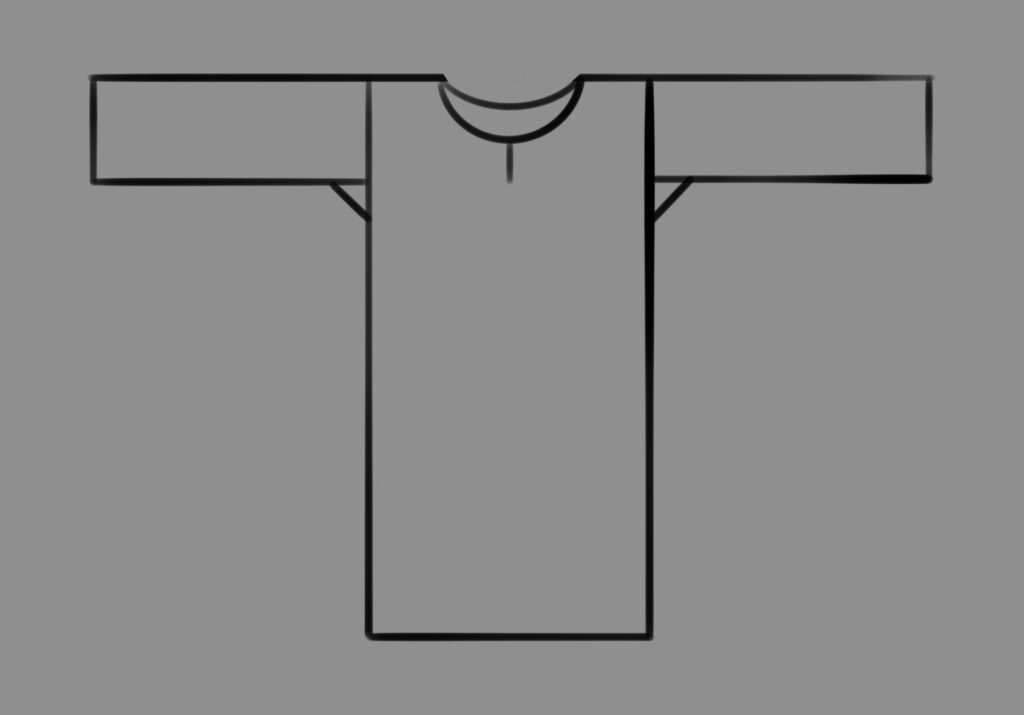
So, what did an undershirt look like in fourteenth-century England? A lot like a tunic, but way simpler. We hardly have any of these undershirts in the archaeological record, and only a few in artwork and manuscripts, but what we do have tells us that they were usually long enough to reach the hip and that necklines matched those of tunics, often keyhole. A keyhole neckline is a hole big enough to sit comfortably around your neck, with a slit down the front to allow your head to pass through. In later centuries, these would get deeper and were sometimes stitched or pinned shut, but for now, they just sit open like this.
Above, you can see what a basic pattern looks like, and what mine is going to look like. For our tunic, we’ll have tapered sleeves and gores down the sides, but this undershirt is all rectangles, including the gores at the armpits which are just squares. What’s with the difference? It mostly had to do with the lifetime of a garment like this and material costs.
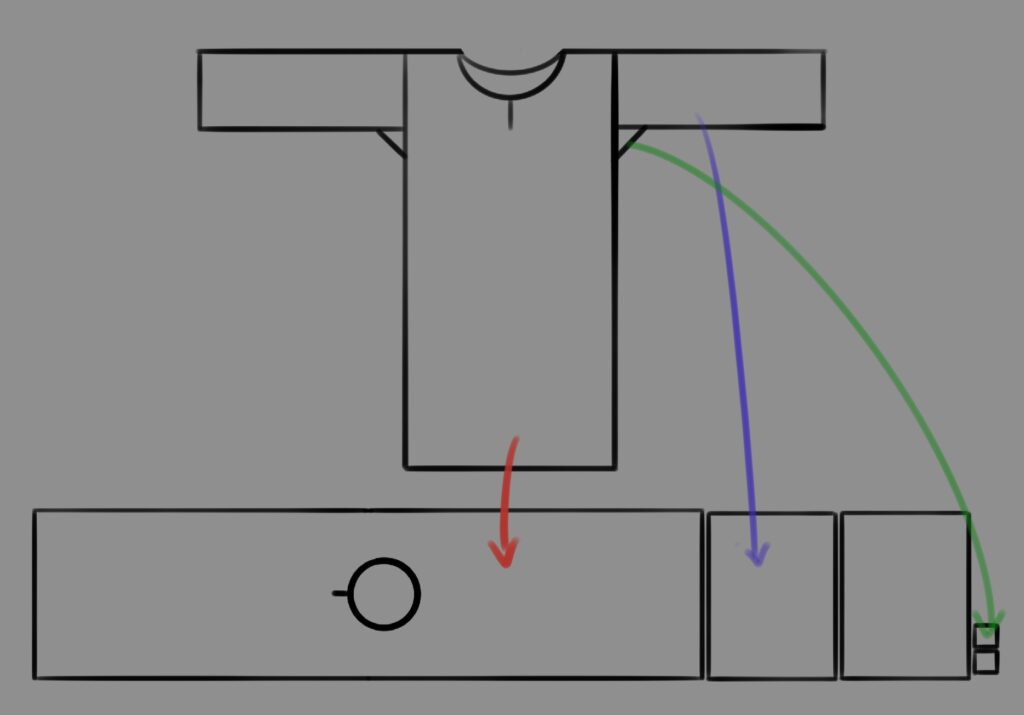
A diagram showing the pattern in shirt form vs decimated into its pattern pieces. The pieces fit together like a puzzle to make the shirt. See how there’s little to no waste? You could probably even fit the gores in the hole of the body piece if you wanted.
See above. All of the pieces are rectangles, so they fit together perfectly- the only fabric you waste is at the end (you can use it for something else!) and the neck hole you cut out. An undershirt or your braies weren’t expected to last as long as your tunic or your hose- usually, the tunic would outlive the shirt. In turn, they had to be replaced more often, or you’d have more than one. On top of this, fabric wasn’t cheap and easy to come by, and you wouldn’t want any to go to waste, especially if you’d woven it yourself. Simple patterns like this, then, were most of what you see when it comes to underclothes.
Don’t expect too many pictures this time around- my home workspace is pretty cramped and not very photogenic- but I’ll do my best. I started out with a t-shirt, because you’re more likely to get something to fit if you model it off of something that you know already fits you. I used this for the length of the sleeves, the width of the sleeves, and the general size of the body piece- though I had to workshop that last one a little. For the sake of brevity, I’ll just show you the final pattern draft.
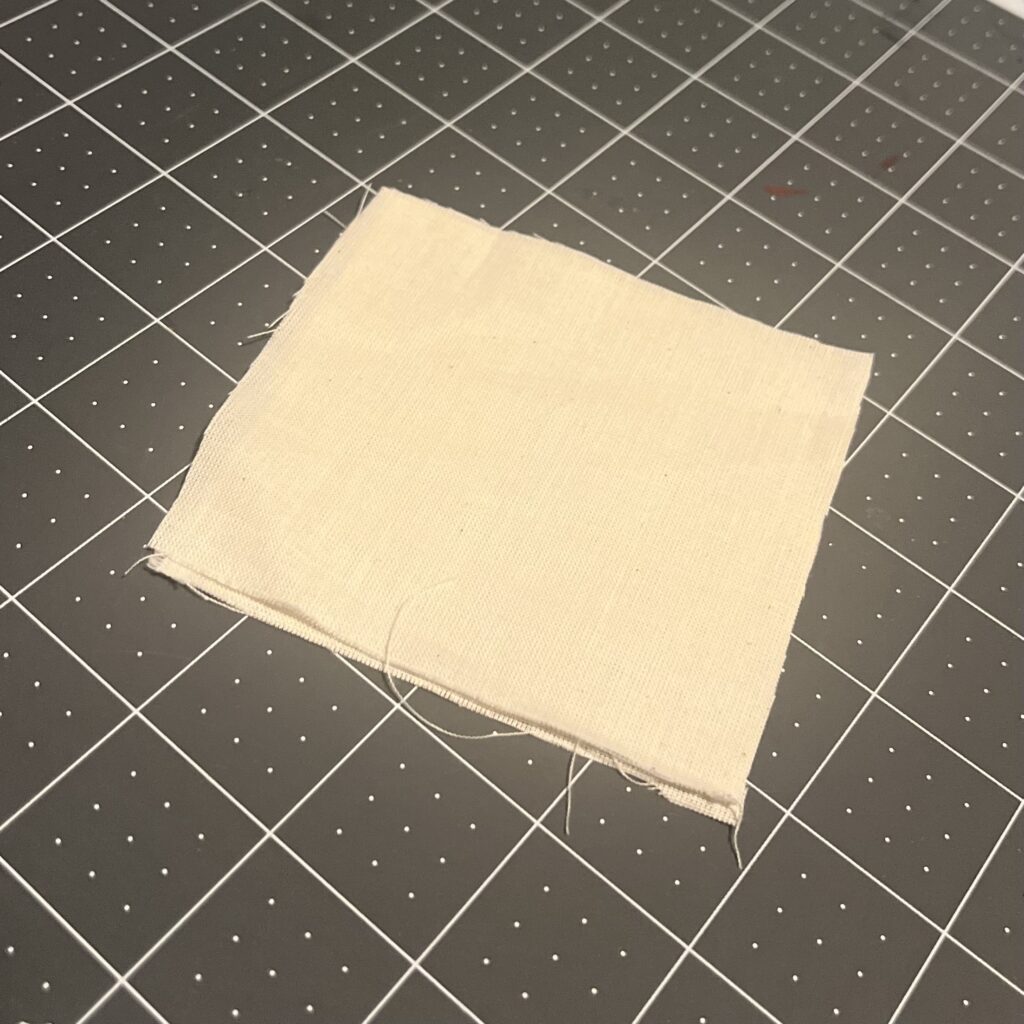
The gores. These get folded in half diagonally and stuffed in your armpits. This sounds uncomfortable, but it’s not. It’s actually great, and keeps you from being stuck zombie-arming instead of throwing your hands in the air at court when the mead hits just right.
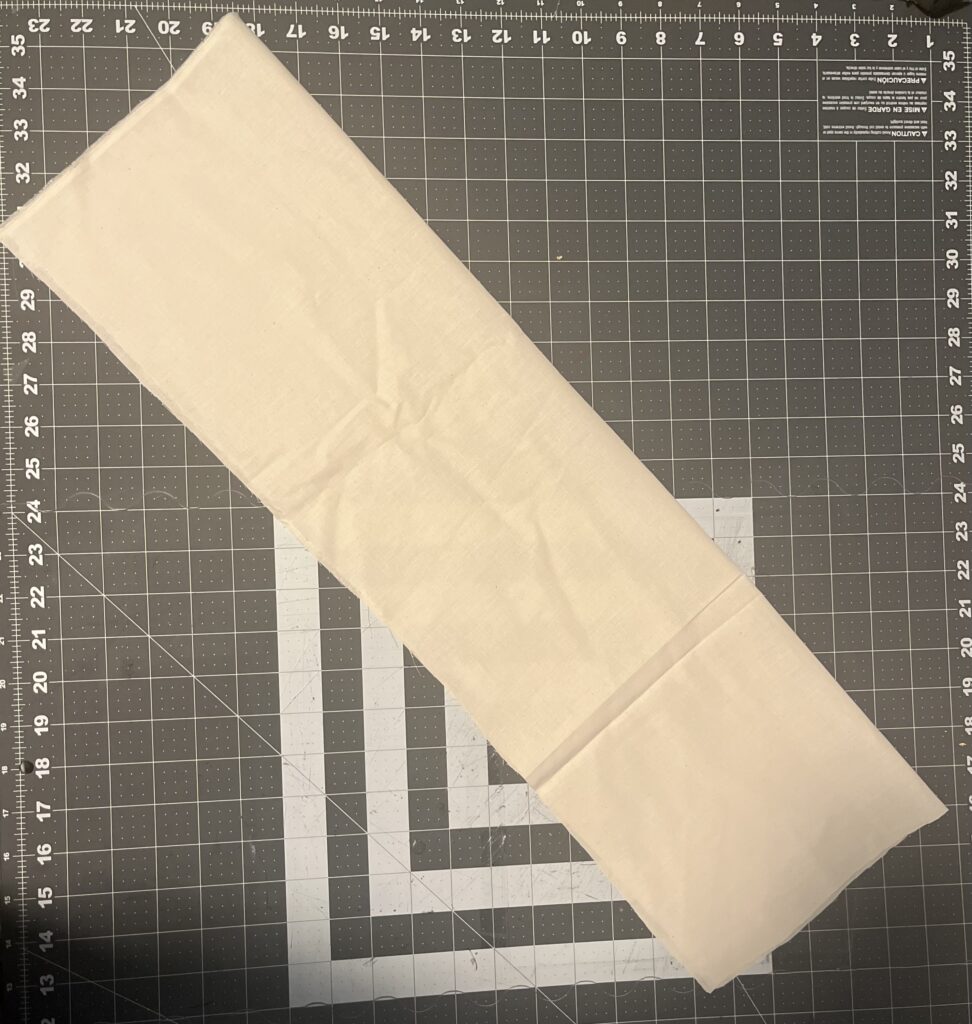
The sleeves. They’re boxy and they’re baggy, but not creepy and kooky or mysterious and spooky. Once they’re sewn together they’ll straighten up and I’ll hack the ends off to size. It’s better to have too much than not enough. Also, when they’re stuffed into the fitted sleeves of the tunic you can’t tell. I secretly tested this theory with a ninth-century bog body tunic, don’t tell anybody.
The sleeves get assembled with little issue. You run a seam down the underarm, and tuck the gore into the pits, open side facing where the body would go. The gore is kind of a pain, but if you don’t have it you’ll regret it, gores are great. You just have to get everything lined up right, which can be kind of a beast, but honestly it’ll be easier once you’re hand sewing.
The sleeve, assembled. The gore is that little triangle.
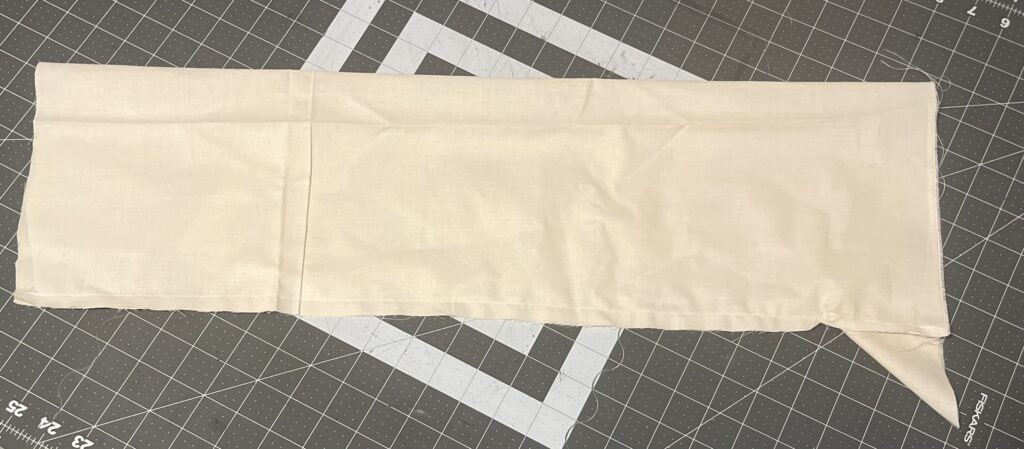
Rectangles make assembly pretty easy. Press the body pieces together, and if you’re going for a shoulder seam, do those first. If not, sew up both sides of the body and leave holes for the sleeves. This guy doesn’t get hemmed because it’s a pattern.
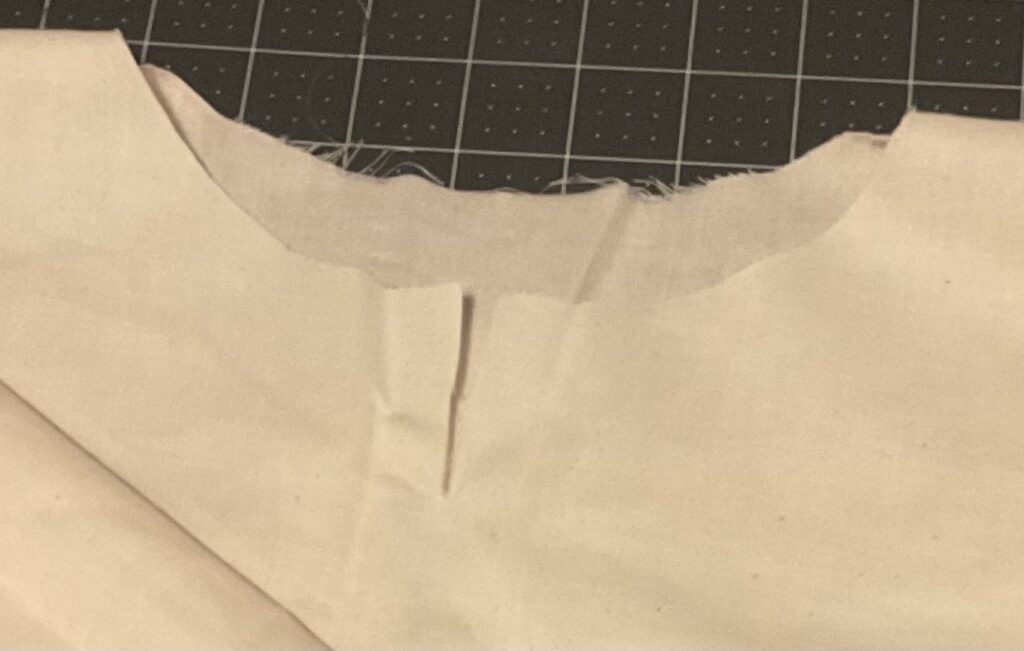
My workspace is too small for a good picture of the body pieces. Have a picture of the keyhole neckline instead. The little slit in the front is where it gets its name, and gives me more leeway to shove my big melon into the shirt with less issue than what would be had otherwise.
Finally, sew the arms onto the shirt. This can be tricky, but if you’re following along at home, I believe in you, and there’s no shame in giving your pieces a little trim to make them fit together more nicely. Make sure everything is lined up and that the point of the gore is seated in the side seam.
The gore, where it goes. Putting in a gore like this if you’re sewing on a machine and not super experienced can be hard because so many seams meet and you can’t have too much material. I still screw it up sometimes, if it makes you feel better.
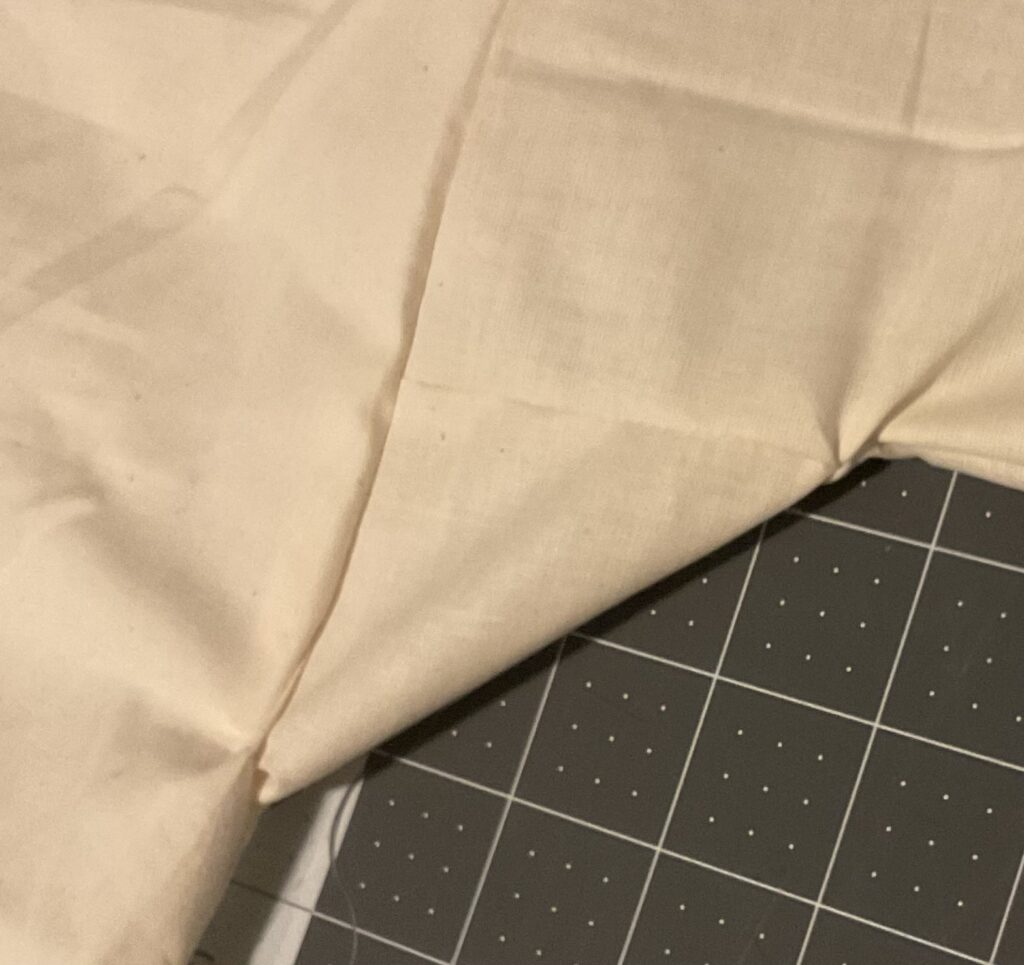
Finally, we have our undershirt pattern! No model pictures today because small workspace and bad lighting, but you’ll get to see the finished project, I promise.
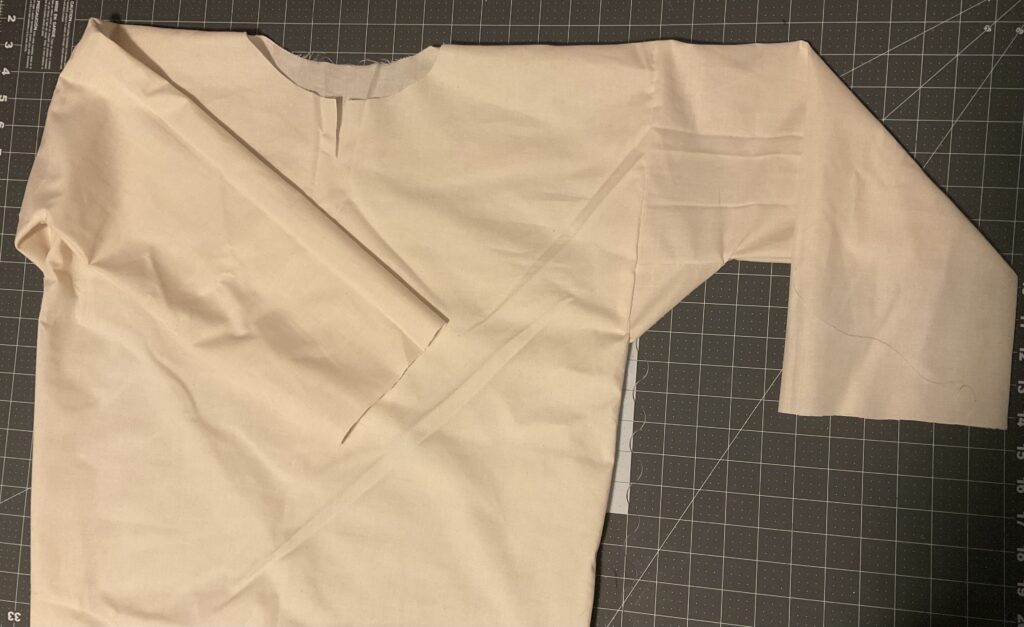
The undershirt pattern, done!
If you’re making a pattern, too, just seam rip this garment and use it as a pattern, tracing your pieces onto your good fabric. Make sure you try it on a few times and move around first to make sure it fits. I was really pleasantly surprised with how nicely this fit me- I work so much better with a pre-existing garment that I know fits me rather than my own measurements, and I’ll probably use my undershirt pattern to fine tune the fit on my final tunic. The gores really make a huge difference in terms of movement, never doubt the gores. I heavily suggest that this garment fit you to the hip and no further- if you decide to go longer, prepare to cut slits in the sides to prevent restricting your movement. It’s hard to make merry or bop sheep-hungry wolves on the nose with your cudgel when you fear you’ll pop a seam.
Thank you for following along again this week, and thank you for reading!
REFERENCES
Backhouse, Janet. The Luttrell Psalter. London: The British Library, 1989.
Blessing, Patricia, Elizabeth Dospěl Williams, and Eiren L. Shea. Medieval Textiles across Eurasia, c. 300–1400. Cambridge: Cambridge University Press, 2023.
Brown, Michelle P. The World of the Luttrell Psalter. London: The British Library, 2006.
Camille, Michael. Mirror in Parchment : The Luttrell Psalter and the Making of Medieval England. Chicago: University of Chicago Press, 1998.
Loven, Pauline. Historical Background : Fourteenth Century Dress and the Luttrell Psalter. London: Bloomsbury Publishing, 2024.
Netherton, Robin, Gale R. Owen-Crocker, and Monica L. Wright. Medieval Clothing and Textiles. Woodbridge: Boydell Press, 2005.
Owen-Crocker, Gale R, Elizabeth Coatsworth, and Maria Hayward. Encyclopedia of Dress and Textiles in the British Isles c. 450-1450. Leiden: Brill, 2012.
Skogsaas, Bente. “A Tablet Woven Band from the Oseberg Grave: Interpretation of Motif and Technique.” EXARC Journal 3. Leiden: EXARC 2022.