Hi there! My name is Charley Damron, and I am a Hedrick intern and history student here at Marshall University. You can check out my most recent research on Harald Hardrada, and be sure to stay on the lookout for my next research topic regarding the Viking longships. Today, I’ll be taking a step away from our research room in Harris Hall and will be spending time in the kitchen instead.
Welcome to the Norse Supper Club. Once a week, we’ll physically answer two questions I feel are often overlooked: What did the Vikings and Norse people eat? And further to that, what did it taste like? These questions are by no means easy to answer. The Norse didn’t leave behind original recipes, cookbooks, or ingredient lists. All we know of their food is what archaeologists can find by analyzing grave goods, skeletal remains, and latrines (yes, latrines).
Each week, I’ll attempt to accurately reconstruct an everyday meal based on available evidence, or at least as accurately as I can, while living in the dorms with limited access to a kitchen and supplies. Some weeks, we will gorge on feast and drink. And I’m sure some weeks will be… educational.
So, join me as we cook—and, more importantly, eat our way through medieval Scandinavia, one bite at a time.
For our inaugural recipe, we’re going to interpret a one-pot Norse stew. I’ve adapted it from a nettle stew recipe from the Viking Ship Museum in Roskilde, Denmark. The ingredients include everything a Norse farmer or Viking may have on hand: beef, cabbage, parsnips, leeks, mustard, and dill, as found in Viking Age latrines (Hald et al. 2020).
Most of the ingredients can be found at Kroger or ALDI, which is where I got them. I could not, however, find parsnips, mustard seed, and dill seed. So, I substituted the mustard seed with ground mustard (admittedly much less, as the ground mustard is stronger than the seed), and the glorious interweb told me I could substitute the dill seed with fennel seed (which the recipe called for anyway). For the parsnips, I just went without. I found pre-diced stew beef at ALDI, so I used that instead of a larger, bone-in roast. I also decided to add potatoes to this recipe, which is not period accurate at all. However, I like potatoes in my stew, so I added them. The Norse people probably would have made this stew in a ceramic or iron pot over an open flame, but as I made this in late March in West Virginia, that really was not ideal, so a crockpot would suffice. I had originally planned to put the ingredients in the crockpot at midnight, let everything cook low and slow, and be ready just about lunch time. I also wanted to make a flatbread, or Grave Loaf, to pair with it. Unfortunately, I was unable to get my hands on barley flour, so I had to forego that idea (in my scenario, the year’s barley harvest must have been bad). My plan to cook overnight was ruined after my RA told me that I was not allowed to have a crockpot in the dorms. So, I decided to just make the stew early in the morning at Harris Hall.
When morning came, I was behind and so moved in a hurry. I shredded the cabbage, chopped the leeks and the carrots (and in my haste, I neglected to peel the carrots, so please don’t forget this step). I layered the crockpot with the ingredients and, as I was behind, engaged the high setting. It is very important to remember to check on it regularly, especially if your meat is sliced into smaller cubes, as it tends to dry out. I neglected to do so, and as a result, the beef became dry and chewy. If this happens to you, just pull the meat out, slice it thinly against the grain, and place it back in the broth. Only put the meat back in the pot if the vegetables are finished cooking (a good rule of thumb is if a knife slides into the vegetables with little to no resistance). From there, I turned the crockpot to its warm setting until we were ready to eat. I was very concerned that drying out the beef would have ruined the dish, but it didn’t. Importantly, even without the beef, it’s a fine vegetable stew. This dish is possible to make vegan; you only need to replace the bone broth with vegetable broth. From there, I served the stew and allowed everyone to season with salt and pepper as they desired (our modern taste buds are spoiled in that aspect).
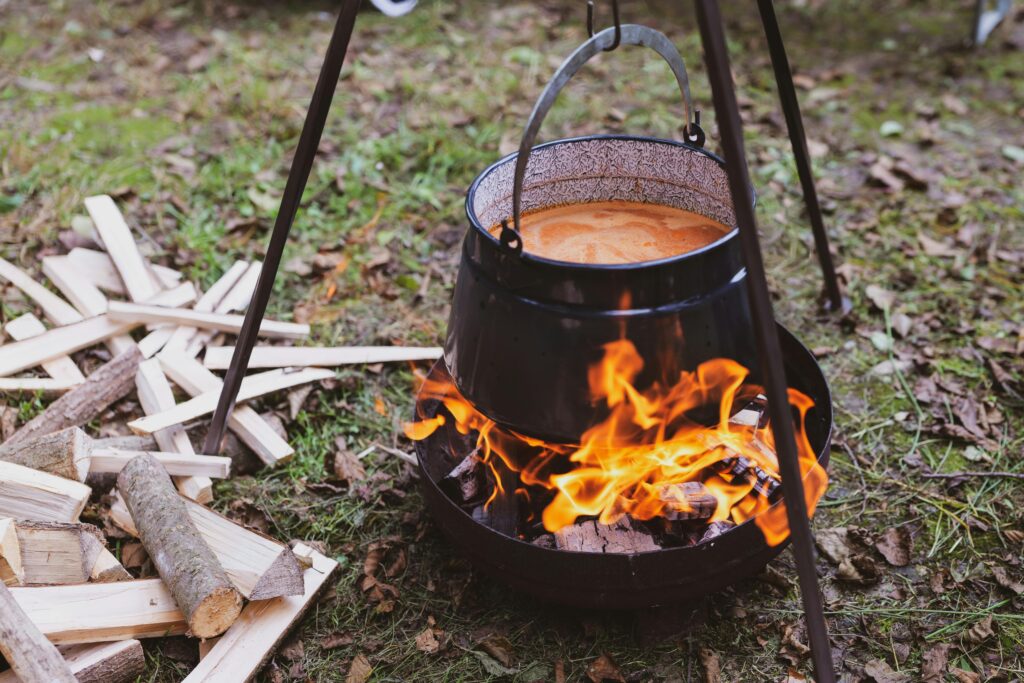
I had intended to take photos of the preparation and cooking process, as well as the end result, but with the RA incident and overcooked beef, I was filled with Viking adrenaline. So, you will see a stock image courtesy of Vladimir Srajber via Pexels. If you feel so inclined to make this recipe yourself, drop a photo in the comments below.
The flavor was rich and unique; it reminded me of the roast my grandmother used to make. I could taste the fennel, mustard, and leek very well. It seemed the cabbage was a bit much, but maybe that’s because I don’t care for cabbage. The result was a delicious, hearty meal that was very easy to prepare, cook, and clean up.
References
Hald, Mette Marie, et al. “Fragments of Meals in Eastern Denmark from the Viking Age to the Renaissance: New Evidence from Organic Remains in Latrines.” Journal of Archaeological Science: Reports, vol. 31, 2020, p. 102361.
Viking Ship Museum, Roskilde. “Food in Viking Times.” n.d., www.vikingeskibsmuseet.dk/frontend/Dokumenter/Food_2_EN.pdf. Accessed March 25, 2026. PDF file.
Viking Beef Stew
Prep time: 15 minutes
Cook time: 8-10 hours (on low) or 4-5 hours (on high)
Serves: 4-6
Ingredients
- Bone-in beef roast 1.5 pounds, cut into 1-inch cubes (for faster cooking)
- Kosher salt 2 tsp
- Parsnips 8 medium, cut into 1-inch cubes (optional if unavailable)
- Carrots 5 medium, cut into 1-inch cubes
- Green cabbage ¼ – ½ head, shredded
- Leeks 3-4, chopped
- Fennel seed1 tbsp
- Mustard seed 1 tbsp
- Dill seed 1 tbsp
- Water or bone broth 4-5 cups (or enough to cover ingredients)
Instructions
- (Optional) Brown the meat. Heat it in a skillet on medium-high heat. Sear beef on all sides until browned.
- Prepare ingredients and layer the slow cooker. Start with the beef, add salt, then layer the carrots, parsnips, cabbage, and leeks on top. Season with fennel, dill, and mustard seed. Add just enough broth or water to cover the ingredients (it may become necessary to add more liquid as the cooking progresses).
- Cover and cook on high for 4-5 hours or low for 8-10 hours until vegetables are fork tender and beef shreds (for better results, cook on low).
- Shred meat into bite-sized chunks and remove bones if applicable.
- Finish and serve in a bowl with broth. If desired, serve with bread and mead.