So, in the last post I finished gluing and cutting out the wooden part of the shield. This went much smoother and quicker than I expected, so because of this, I didn’t have materials for the next part of the shield making process. This could also be because I simply forgot to order them in time, oops. However, I now have most of what I need for this next section, which is the layers of linen fabric on the front of the shield, and I’ll also discuss the straps/handles. The Black Prince shield also has a layer of paper and an outermost layer of leather but that will be for another time. I don’t actually have the leather for the straps yet, but I will still be talking about some common strap layouts used on heater shields, Including, the one for the Black Prince shield
The Black Prince shield has an excessive number of layers on the front of the shield consisting of various materials, but practically all medieval heater shields would have had at least one layer of linen glued over the front. Why is this? Well, there are a few reasons. The clearest thing being, it adds another protective layer to the shield, especially if there are numerous layers. While linen on its own is far from rigid, once it’s been slathered in glue, it cures into a surprisingly hard and robust shell.
Another reason for the linen covering isn’t quite as intuitive. Due to the nature of what a shield is for, unless you’re Captain America, your shield will break eventually. Having some form of fabric or leather glued to the front (and often back) of your shield means when it’s shattered into a million pieces by another knight’s lance, the wood shrapnel doesn’t fly everywhere. So, covering the shield in linen contains or minimizes flying splinters preventing an embarrassing death by being impaled by your own shield.
While those are two important reasons why heater shields were covered in layers of fabric, there is a third and far more important reason as well. The glue-soaked linen (or leather) can result in an exceedingly smooth finish that lends itself well to paints, gesso, gilding, and practically any other form of medieval art. Everyone knows the most important part about fighting a war is looking stylish while doing it. Winning is pointless if you don’t show off your wealth while stunting on your opponent, and what better way to do that than to bedazzle your shield. The best way to show you have more money than you know what to do with is by spending excessive amounts putting art on an object that is made to be beaten with axes, swords, and hammers. Seriously though, art on heater shields was important. It became standard for everyone to put their coat of arms on their shield, so everyone is clear on who they’re murdering.
Now, onto putting the linen on the Black Prince shield. This process is as simple as it seems, you simply lay some linen over the shield and paint over it with glue. I decided on using rawhide glue (which I made in an earlier part of this series) for this process for a few reasons: it dries quickly, has a hard finish, and is my best guess at what was actually used for the Black Prince shield. It’s been impossible to find good evidence of what glue was used on the Black Prince shield, but this seems like a safe bet. I settled on doing three layers of linen; there is also a layer of paper and leather but that is for another time.
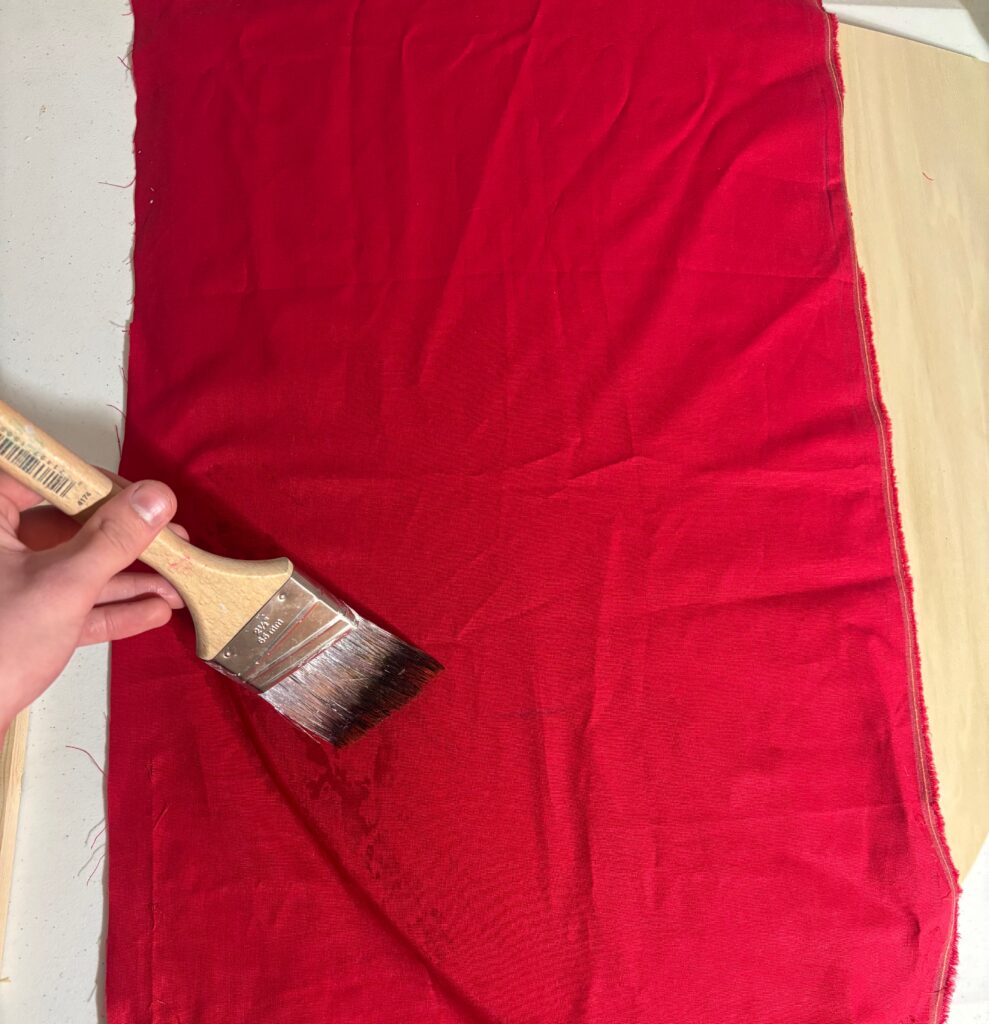
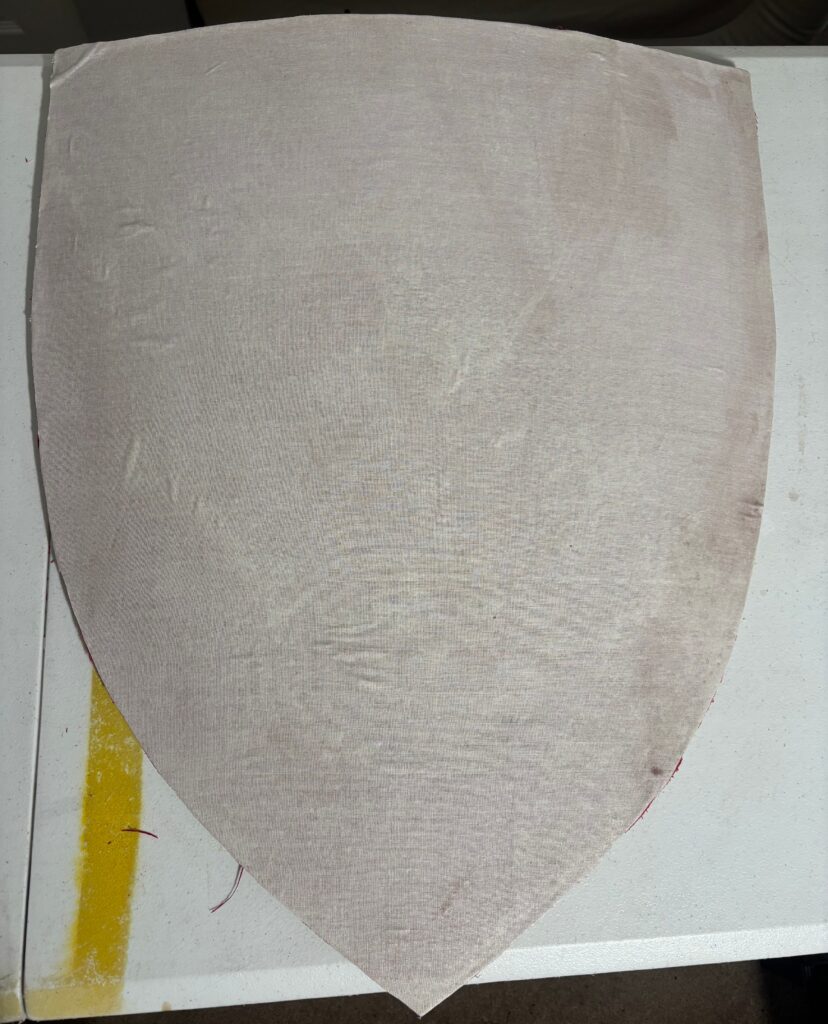
As I’m sure you’ve noticed, there is a lot of bubbles and wrinkles in the second photo. I should have done a better job at avoiding this but it’s going to be covered a layer of paper and leather, so they shouldn’t be noticeable in the final product. However, I will still know those bubbly mistakes are still there, and it will likely forever torment me.
Attaching the straps to the shield will be the next part of the shield making process. Heater shield straps/handles were extremely personalized leading to a ton of unique layouts. There are also a lot of examples of shields with extra straps so the owner could switch how they hold the shield depending on the task. A common part of most of the historical artifacts is the inclusion of what is called a Guige strap. The Guige strap is essentially never used in modern pop-culture depictions of heater shields making them seem alien and impractical at first.
Here is an example of a unique strap layout depicted in the La Bible Porta (1240). The arm straps would heavily constrain the wielder’s movement, and this likely isn’t a real example of how a knight would wield a heater shield. It was likely depicted this way purely because it looks good for the artwork. More importantly though, see that strap going from the shield around the rider’s neck? that’s the Guige strap.
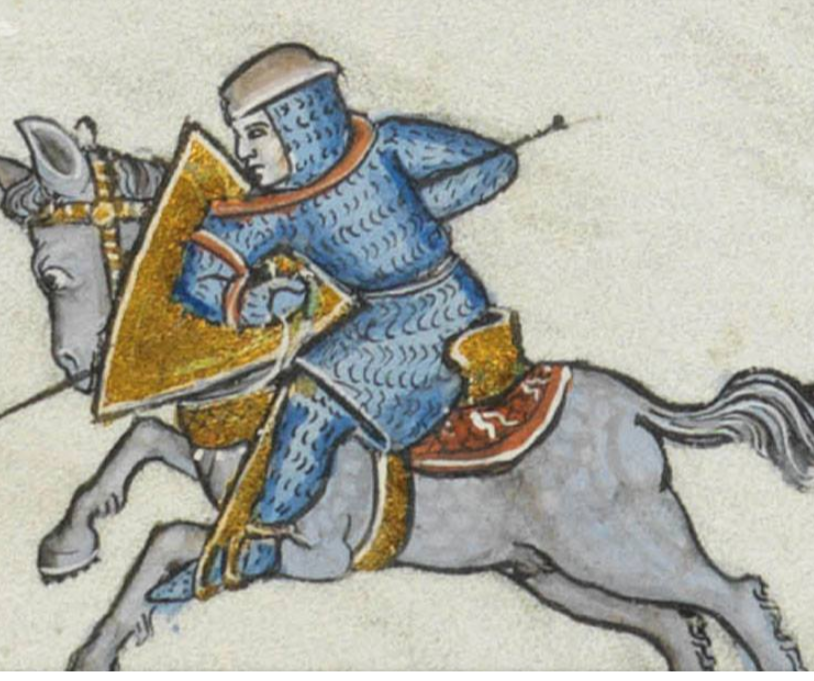
The Guige strap is a long leather strap that attaches to the shield at two points and is looped around the fighter’s neck while in combat. This might seem impractical due to it limiting the shield’s range of movement, but it has a lot of upsides. Usually while fighting with a shield, the shield doesn’t go very far away from the body; meaning, the Guige straps limitations aren’t as bad as they may appear. The only real maneuver the Guige strap prohibits is shield bashing. The benefits far outweigh the drawbacks. One of the benefits of the Guige strap is that it puts some of the shield’s weight on the neck/shoulder area instead of all the weight being on your arms. The helps conserve stamina and means you can brace better for impacts. It also makes it harder for an opponent to grab and manipulate your shield. Having the shield around your neck also gives you the opportunity to fling the shield behind your back and have both hands free without losing your shield. As you can imagine, the Guige strap is also helpful for carrying the shield outside of combat by slinging it over the shoulder. Even with all these advantages though, there are still plenty of historical examples of heater shields without Guige straps.
This is a depiction of a strap/handle layout made by Jan Kohlmorgen in his book Der Mittelalterliche Reiterschild. It shows the likely layout of the shield of the Lords of Nordeck zu Rabenau (14th century). Of course, there is a Guige strap, but also multiple handle placements. The handles allow the user to hold the shield with the arm sideways or diagonal depending on scenario or preference.
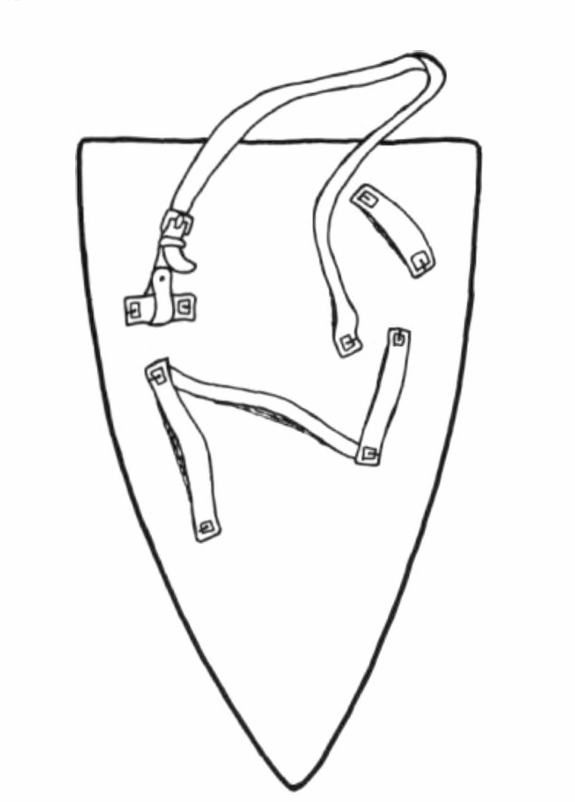
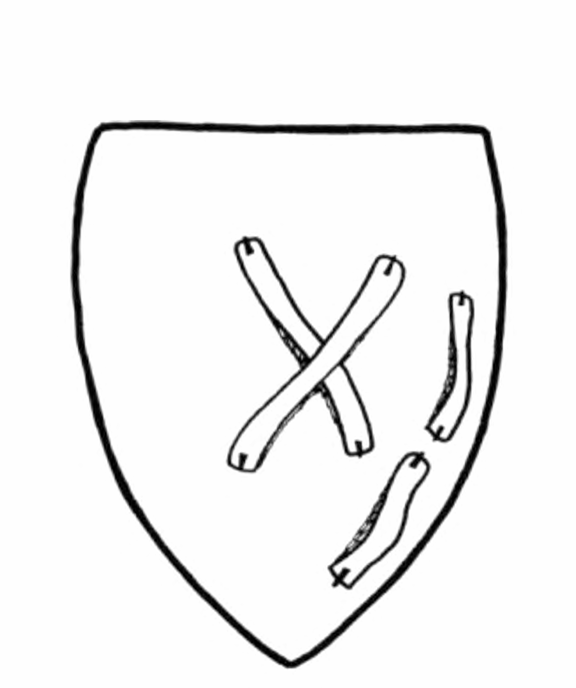
Another depiction of an unknown 14th century shield from Jan Kohlmorgen. These straps are located in entirely different spots than the previous shield. One of the handles is used to wield the shield upside down! This is probably why there is no Guige strap because it wouldn’t suit the aggressive fighting style of an upside down heater shield. There are plenty of other examples of distinguished ways of holding a heater shield but I think you get the point.
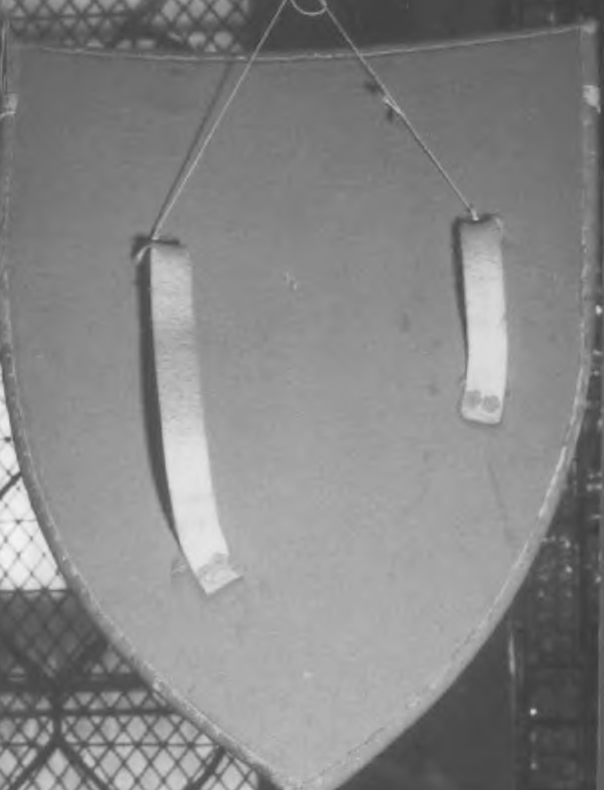
Sadly, the Black Prince shield doesn’t lend itself well to my love of heater shield’s complex and personalized strap/handle placement or my love of the Guige strap. From where the Black Prince shield was made as funeral shield and was never meant for combat, it has the lamest most vanilla strap layout possible. Although the leather straps on the original Black Prince shield have rotted away here is a picture of what the strap layout would have looked like based on the anchor holes.
Sadly, I don’t have the leather yet to add the straps to my recreation of the Black Prince shield, so I’ll have to show that process in the next post, along with making medieval linen paper for the next layer of the shield. Thanks for reading!