The life of Birgitta Birgersdotter (1303–1373), later known as Saint Bridget of Sweden, represents a rare intersection of medieval secular power and ecclesiastical reform. Her biography is not merely a collection of miracles, but a study in how a member of the Scandinavian high nobility leveraged the legal and social structures of the fourteenth century to claim a unique form of “prophetic authority.”
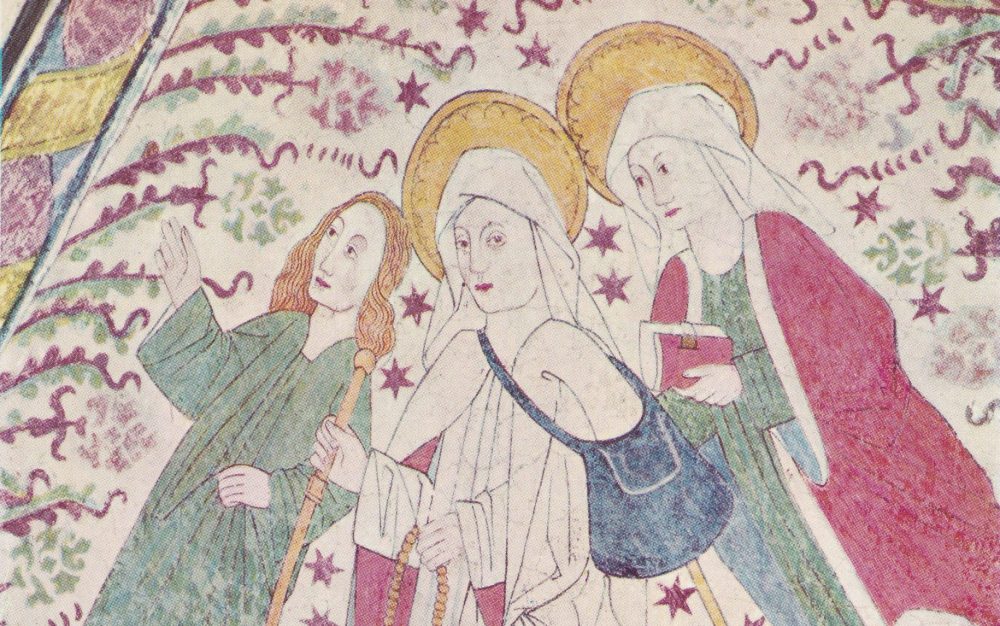
This authority was rooted in her bloodline, as Birgitta was born into the Finsta lineage (Finsta-ätten), one of the most powerful noble houses in Sweden at the time. Based at Finsta Manor in Uppland, her family were “Lawspeakers” (lagmän), the hereditary keepers of the law. In a society where the written word was rare, the “Lawspeaker” was the living constitution, tasked with reciting the law at the Thing (regional assembly).[1] Her father, Birger Persson, was a kingmaker who helped draft national codes for the monarchy.
The weight of this legal heritage did more than shape her social standing, it gifted Birgitta with a legalistic spiritual vocabulary. She did not merely view the divine as a source of comfort, but as a “Supreme Judge” to whom the soul was legally bound. Even in Birgitta’s youth, she felt the weight of this calling, later recording Christ’s words to her: “I have not chosen you for your own sake alone, but for the sake of the salvation of others… You shall be my channel.”[1]
“I have not chosen you for your own sake alone, but for the sake of the salvation of others… You shall be my channel.”
While her spiritual internal life was developing, her external life remained tethered to the expectations of her class. In 1316 and at the age of thirteen, Birgitta entered into a strategic marriage with Ulf Gudmarsson of the Ulvåsa family. It is important to note that in the 14th century, noble marriage was primarily a contract designed to consolidate land and military alliances – a “peace-weaving” mechanism rather than a purely romantic union. Ulf, like Birgitta’s father, became a “Lawspeaker”, and thus this marriage united two of the most influential judicial families in Sweden.[1]
Within this powerful union, Birgitta fulfilled the traditional noble expectation of continuing the lineage. While managing the estate at Ulfåsa, Birgitta bore eight children: Märta, Karl, Birger, Bengt, Gudmar, Ingeborg, Cecilia, and Catherine. Her daughter Catherine (Katarina) of Sweden became her mother’s most loyal disciple, following her to Rome and eventually becoming the first Abbess of Vadstena and later St. Catherine. Catherine’s own subsequent canonization solidified the “second generation” of the Bridgettine vision.[1]
Birgitta’s domestic influence at Ulvåsa eventually expanded into the highest corridors of Swedish power. During these years, Birgitta served as the magistra (a high-ranking governess and moral advisor) to King Magnus Eriksson, the King of Sweden and Norway and a complex ruler who attempted to centralize power along with the young Queen Blanche of Namur, a princess from present-day Belgium. As a young foreign queen in a cold, distant land, Blanche relied on Birgitta for guidance. However, Birgitta was a stern mentor. She used her position to deliver “revelations” that were often blunt critiques of the King’s taxes and his perceived lack of enthusiasm to crusade. To Birgitta, the King was not above the law – he was only but a servant of God’s law. She famously wrote:
“A person who has received more from God than others is more bound to give an account to God than others.”[1]
“A person who has received more from God than others is more bound to give an account to God than others.”
The stability of her life at court was brought to an end by a profound personal loss that transformed her social influence into a spiritual mission. The pivotal shift in her life occurred in 1341 during a pilgrimage to Santiago de Compostela. After her husband Ulf’s death in 1344, Birgitta transitioned into a mystic – an individual claiming a direct, unmediated experience of the Divine. She described herself as a “channel” through which God’s word flowed. Unlike many female mystics who sought enclosure, Birgitta’s widowhood allowed her to remain active in the public sphere, dictating her Revelationes as a political and spiritual manifesto.
This new mystical calling soon took on a physical form in the landscape of Sweden. Her most significant institutional contribution was the foundation of the Order of the Most Holy Savior (aka the Bridgettines) at Vadstena. In 1346, she secured an estate from King Magnus to build a double monastery – a revolutionary structure where sixty nuns and twenty-five brothers (priests, deacons, and lay brothers) lived in separate wings but shared a common church.[1] In a radical reversal of medieval norms, Birgitta decreed that the Abbess held supreme authority over both men and women, arguing that this mirrored the Virgin Mary’s role as the “Queen of the Apostles.” Regarding this foundation, Christ reportedly told her:
“This vineyard I have planted with my own hand, and I have watered it with my blood.”[2]
“This vineyard I have planted with my own hand, and I have watered it with my blood.”
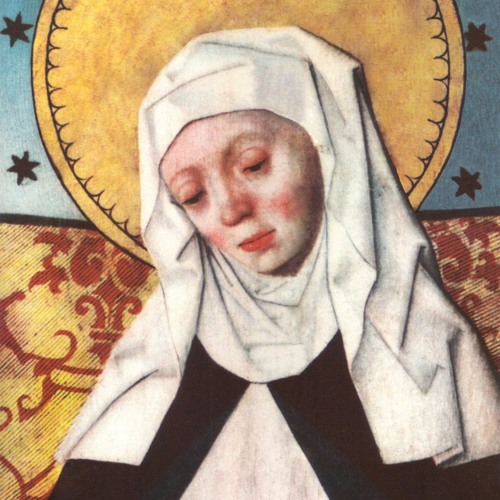
Having established her order in the North, Birgitta turned her gaze toward the heart of Christendom, which was then reeling from crisis. In 1349, Birgitta left Sweden for Rome. She arrived to find a city in ruins: the Popes had all fled to Avignon, France, leaving Rome to decay while the Black Death ravaged the population. Birgitta viewed the plague as divine punishment for Church corruption and became a “prophet of doom” in the Roman streets. She delivered chilling ultimatums to the Popes, such as her warning to Gregory XI: “Hear the words of the Lord: Why do you delay? Arise, and do not fear! Enter into Italy to the city of Rome, and there you shall serve me and the Church.”[1]
“Hear the words of the Lord: Why do you delay? Arise, and do not fear! Enter into Italy to the city of Rome, and there you shall serve me and the Church.”
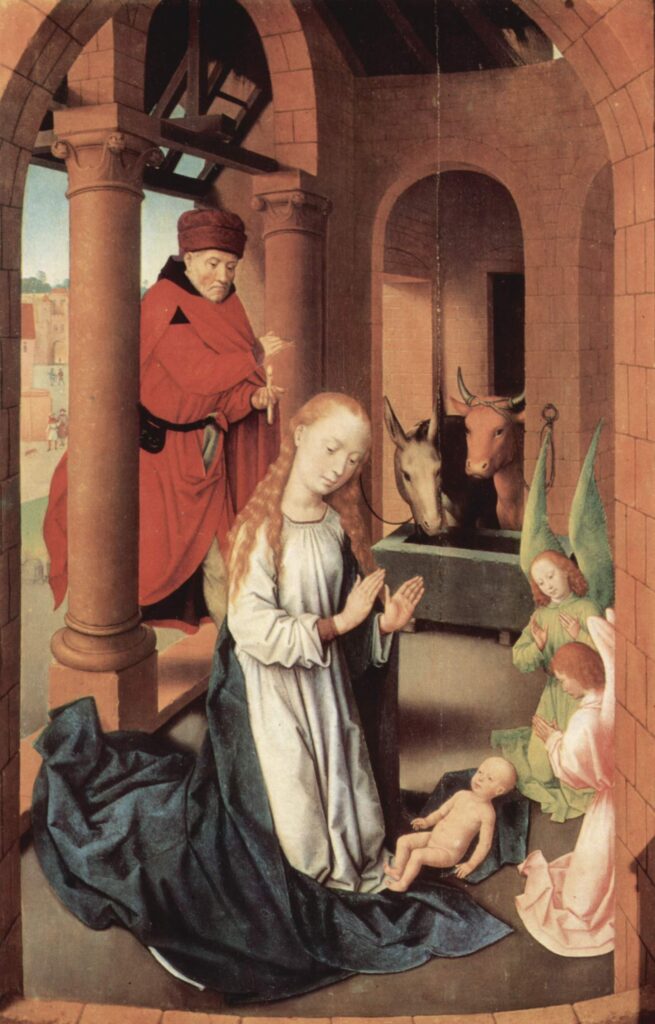
Even as she worked to reform the Papacy, Birgitta continued to experience visions that would leave an indelible mark on Western culture. One of her most culturally influential moments occurred during her 1372 pilgrimage to Jerusalem. During this visit, Birgitta had a vision of the Nativity where she described the Christ child as a source of unearthly splendor, lying on the ground and radiating a light that “annihilated” Joseph’s candle.[1] This singular mystical experience did more than inform her own piety – it fundamentally redirected the course of Christian art. Before Birgitta’s vision, the Nativity was typically depicted with Jesus wrapped in swaddling clothes in a manger. However, following the wide distribution of her Revelationes, artists across Europe began to follow her specific description: the Virgin Mary kneeling in prayer and the infant Jesus lying naked on the cold ground radiating a light so intense that it made Joseph’s candle seem dim. This vision altered Renaissance iconography, as artists began depicting the radiant birth she described in Book VII, Chapter 21.
Ultimately, the legacy of Birgitta Birgersdotter is one of a woman who refused to be confined by the expectations of her age, weaving together the threads of her life into a singular holy crusade. When she passed away in Rome in 1373, she left behind a void that only a saint could fill which led to her swift canonization by Pope Boniface IX in 1391. The Church recognized that her life was a rare synthesis of heroic virtue – marked by her staggering transition from a wealthy, high-born noble to a humble servant who begged for the poor and remained fiercely loyal to Catholic doctrine. Her political influence proved essential, as she was credited with being the divine conscience that finally pushed the Papacy to abandon the comforts of Avignon and return to Rome during the Black Death. It is also important to highlight that her legacy lived on through the Bridgettine Order, which provided a new, disciplined model of monastic life that empowered women under a revolutionary structure of leadership. Birgitta of Sweden remains a definitive testament to a woman who utilized her noble lineage, her experience as a mother, and her sharp legal mind to reshape the religious and artistic landscape of Europe, proving that the voice of a “channel” from the North could echo through the halls of eternity.
[1] Birgitta of Sweden, Revelationes, Book VII, Ch. 21
[1] Revelationes, Book IV, Ch. 142.
[1] Regula Salvatoris (The Rule of the Savior), Ch. 14-15.
[2] Revelationes, Book IV, Ch. 126.
[1] Revelationes, Book IV, Ch. 77.
[1] Claire L. Sahlin, Birgitta of Sweden and the Voice of Prophecy (Boydell & Brewer, 2001), 121.
[1] Vita B. Birgitte (The Life of Birgitta), compiled by Peter of Alvastra and Peter of Skänninge.
[1] Birgitta of Sweden, The Revelations of St. Birgitta of Sweden, Volume 1: Liber Caelestis, Books I-III, trans. Denis Searby (Oxford: Oxford University Press, 2006), Book I, Ch. 2.
[1] Bridget Morris, St. Birgitta of Sweden (Woodbridge: Boydell Press, 1999), 15-22.